
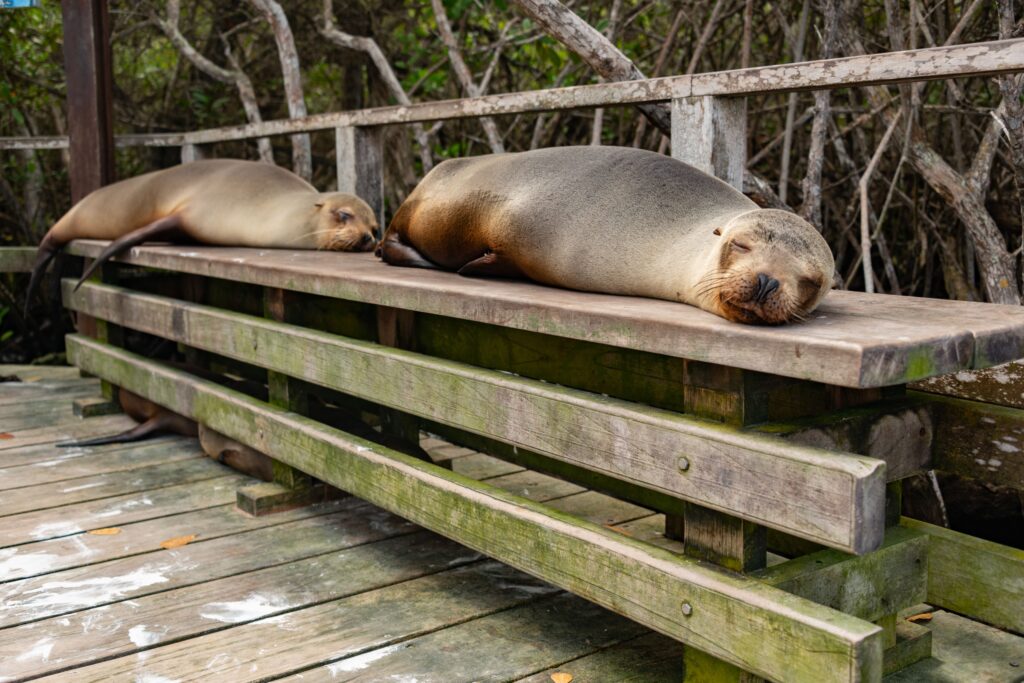
I still remember stepping off the plane in San Cristobal Galapagos and being greeted, less than sixty seconds later, by a sea lion sprawled across a park bench like it owned the place. It did, sort of. That’s San Cristobal in a nutshell: a small, laid-back Ecuadorian island where the wildlife hasn’t gotten the memo that it’s supposed to be shy around people.
If you’re trying to decide which Galapagos island to fly into, how many days you actually need, or whether San Cristobal Galapagos or Santa Cruz makes a better home base, you’re in the right place. I’ve pulled together everything I wish someone had told me before I went — the beaches, the hikes, the day trips, the honest costs, and the mistakes worth avoiding — so you can build a trip that actually matches how you like to travel.
Quick Facts: San Cristobal Galapagos at a Glance
| Fact | Detail |
| Location | Easternmost inhabited island in the Galapagos archipelago, Ecuador |
| Main town | Puerto Baquerizo Moreno |
| Airport code | SCY (San Cristóbal Airport / Aeropuerto El Progreso) |
| Population | Roughly 7,500 residents |
| Best known for | Free, land-based snorkeling with sea lions, Kicker Rock, hammerhead sharks |
| Closest islands | Santa Cruz (2–2.5 hours by boat), Española (day-trip distance) |
| Ideal trip length | 3–5 days |
| Currency | US Dollar |
| Best time to visit | June–December for calmer seas and wildlife-watching; December–May for warmer swimming |
Where Is San Cristobal in the Galapagos?
San Cristobal Galapagos sits at the far eastern edge of the archipelago, roughly 1,000 kilometers (620 miles) off the coast of mainland Ecuador. It’s widely believed to be the first island Charles Darwin set foot on in 1835, and there’s a small monument near the waterfront that marks the spot.
The island’s only town, Puerto Baquerizo Moreno, hugs a curved bay on the southwestern coast and functions as the provincial capital of the entire Galapagos region — a fact that surprises a lot of visitors who assume Santa Cruz, with its bigger tourist infrastructure, holds that title instead.
What makes San Cristobal Galapagos genuinely unusual among the inhabited islands is its airport. Unlike Baltra (the airport serving Santa Cruz), which sits on its own separate islet and requires a bus, a ferry, and another bus just to reach town, the San Cristobal Galapagos airport is a ten-minute walk from the main plaza. You land, you walk out the gate, and you’re basically already on vacation.
How to Get to San Cristobal Galapagos
There’s exactly one practical way to reach the island from outside the archipelago, and a couple of ways to reach it from within.
Flights to San Cristobal Galapagos
Direct flights to San Cristobal Galapagos run daily from both major gateway cities in mainland Ecuador:
| Departure City | Flight Time | Typical Frequency |
| Quito (UIO) | About 2.5–3 hours (usually with a brief stop in Guayaquil) | Multiple daily flights |
| Guayaquil (GYE) | About 1.5–2 hours, non-stop | Multiple daily flights |
A flight from Guayaquil to San Cristobal Galapagos is generally the faster and cheaper option if your itinerary allows it, since most Quito-to-Galapagos flights make a short technical stop in Guayaquil anyway (passengers typically stay on board). Book as early as you can — availability tightens up considerably from June through August and over the December holidays.
Two airlines operate the route with regular schedules, and both are bookable through the usual flight-comparison sites. Whichever you choose, budget for the mandatory Galapagos entry fees on top of your ticket price:
- Transit Control Card (TCT): around $20, purchased at the departure airport in Quito or Guayaquil before you fly.
- Galapagos National Park entrance fee: $200 for most foreign visitors (as of 2026), paid in cash or by card on arrival in the islands. Children and some nationalities pay reduced rates — check current figures before you travel, since park fees are periodically revised.
Getting Between San Cristobal Galapagos and Other Islands
If your trip includes island-hopping, you have two options for getting from San Cristobal Galapagos to Santa Cruz (or Isabela):
- Inter-island ferry (locally called a “fibra”): A fast passenger boat runs twice daily between San Cristobal Galapagos and Santa Cruz, taking around 2–2.5 hours each way. It’s inexpensive, but it’s also a genuinely bumpy, open-ocean ride — bring motion sickness tablets if you’re at all prone to seasickness, and expect to get a little wet.
- Short domestic flight: A small regional airline flies between the islands for a higher fare but a much smoother, faster trip (about 25–30 minutes). This is worth considering if you’re short on time or don’t do well on boats.
A smart routing trick that experienced Galapagos travelers swear by: fly into San Cristobal Galapagos and fly out of Baltra (or vice versa), rather than flying in and out of the same airport. It saves you from doubling back on a ferry ride purely to catch your departure flight.
Best Time to Visit San Cristobal Galapagos
The Galapagos sits almost exactly on the equator, so temperatures stay warm year-round, but the islands actually have two distinct seasons driven by ocean currents rather than rainfall alone.
| Season | Months | Water & Air Temp | What to Expect |
| Warm/wet season | December–May | Warmer seas (24–27°C / 75–81°F), occasional brief afternoon showers | Calmer water, better for casual swimming, marine iguana mating displays |
| Cool/dry season | June–November | Cooler seas (19–23°C / 66–73°F), the “garúa” mist rolls in | Rougher water and stronger currents, but the nutrient-rich Humboldt Current brings in more marine life — better odds of dolphins, whales, and larger fish |
If snorkeling and diving with big animals is your top priority, the cooler months from June through November tend to reward you with more marine biomass, including a better shot at whale sharks and larger schools of fish around Kicker Rock. If you’d rather swim in warmer, calmer water and don’t mind a bit of humidity, aim for the December-to-May stretch. Either way, pack a light wetsuit or rash guard — even in the “warm” season, an hour of snorkeling will have most people feeling the chill eventually.
The Best Things to Do in San Cristobal Galapagos
San Cristobal Galapagos has a rare mix going for it: a genuine wildlife spectacle right in town, plus a full slate of hikes, beaches, and boat trips that don’t require a cruise ship to access. Here’s what actually earns a spot on your itinerary.
1. Wander Puerto Baquerizo Moreno and Watch the Town Wildlife
Before you plan a single excursion, just walk the malecón (waterfront promenade) through town. Sea lions colonize the benches, the steps, and occasionally parked boats. Marine iguanas sun themselves on the rocks a few feet from café tables. Frigate birds and pelicans circle the fish market waiting for scraps. It costs nothing, takes no planning, and it’s honestly one of the best free things to do in San Cristobal Galapagos.
2. Hike to Cerro Tijeretas and Snorkel at Tijeretas Bay
A paved, well-marked trail leads from near the Interpretation Center up to Cerro Tijeretas (“Frigate bird Hill”), about a 30–45 minute round trip walk through lava-rock terrain and towering cactus. At the top, you get sweeping views over Shipwreck Bay toward Kicker Rock in the distance, plus a close-up look at frigate birds if you visit between March and May, when the males inflate their bright red throat pouches.
On the way down, detour to Tijeretas Bay itself, a small cove that’s consistently one of the best places to snorkel with sea lions on the whole island. The water’s calm, it’s shallow enough for beginners, and sea lions will frequently swim right up alongside you out of pure curiosity.
3. Watch the Sunset at Playa Mann
Puerto Baquerizo Moreno faces almost directly west, which means Playa Mann, right at the edge of town, gets some of the best sunsets anywhere in the Galapagos. Locals treat it like a nightly ritual — around 5:30 p.m., the beach fills with families, dogs, tourists, and sea lions all watching the sky turn orange together. It’s an easy walk from most accommodation and a lovely, unhurried way to close out a day of hiking or snorkeling.
4. Relax and Snorkel at Playa Punta Carola
A short walk past Playa Mann brings you to Punta Carola, regularly ranked among the best beaches in Ecuador. Expect soft golden sand, clear water, and marine iguanas draped over the rocks like they’re posing for photos. Walk to the small lighthouse at the point for a good chance of spotting blue-footed boobies, and stick around for sunset if you missed it at Playa Mann.
5. Snorkel with Sea Lions and Turtles at La Loberia
About a 30–40 minute walk (or a short taxi ride) from town, La Loberia is a wilder, less-developed stretch of coastline backed by lava rock and dry scrub. It’s home to a resident sea lion colony and consistently good sightings of green sea turtles in the shallows. There’s no shade and no facilities, so bring water and sun protection, but the payoff is one of the most peaceful, least crowded snorkeling spots on the island.
6. Learn the Island’s Story at the Galapagos Interpretation Center
This free museum, just a few minutes’ walk from town, is worth visiting early in your trip rather than as an afterthought. Exhibits cover the volcanic origins of the archipelago, the ecology that makes it so unique, the human history (including its era as a penal colony), and Darwin’s 1835 landing. Spending 45 minutes here genuinely changes how you experience everything else on the island afterward.
7. Explore the Highlands: El Junco Lagoon
Roughly 16 km (10 miles) inland and uphill from town sits El Junco, the only permanent freshwater lagoon in the entire Galapagos archipelago. It fills the caldera of an extinct volcano, and it’s a magnet for frigate birds, which gather here to rinse the salt from their feathers — something you can’t see them do anywhere else. A short trail (about 20 minutes) climbs to the crater rim, and the misty, cool microclimate up here is a striking contrast to the beaches below. Go early in the morning, when the mist is at its most atmospheric and the birds are most active.
8. Meet Giant Tortoises at the Galapaguera
Also in the highlands, the Galapaguera de Cerro Colorado is a semi-natural breeding and reserve center for the San Cristobal Galapagos subspecies of giant tortoise. Unlike some tortoise reserves on other islands, entry here is free and doesn’t require a guide — you simply follow a looping path past tortoises of every age, from newly hatched babies to slow-moving giants that may be over a century old.
9. Swim at Remote Puerto Chino Beach
Further along the same highlands road, a short cactus-lined trail drops down to Puerto Chino, a secluded white-sand cove that regularly gets voted a highlight by visitors who make the trip. The swimming here is excellent, sea lions are a near-guarantee, and because it takes a bit more effort to reach, it rarely feels crowded.
Tip: El Junco, the Galapaguera, and Puerto Chino sit along the same road, so most visitors combine all three into a single half-day “highlands tour,” either by hiring a taxi for a few hours or booking an organized tour that includes all three stops plus round-trip transport.
10. Surf at Punta Carola and Tongo Reef
San Cristobal Galapagos is considered the surfing capital of Ecuador, and the point breaks at Punta Carola and Tongo Reef draw a small but loyal following of surfers, particularly from December through May when swells are more consistent. Board rentals are available from a handful of shops along the malecón, and a few local instructors offer lessons for beginners who want to give it a try.
11. Snorkel or Dive at Kicker Rock (León Dormido)
If you only book one boat excursion on San Cristobal Galapagos, make it Kicker Rock. This dramatic volcanic remnant juts straight out of the ocean a short boat ride from town, split into two towering rock pillars with a narrow channel running between them. Snorkeling or diving through that channel is the single most talked-about experience on the island — expect a real chance of spotting hammerhead sharks, along with sea turtles, rays, and reef fish, in some of the clearest water in the archipelago.
Most Kicker Rock trips run as full-day tours and include a stop at another beach on the way back. Non-divers can absolutely still snorkel the site, though it’s worth booking a trip aimed at snorkelers specifically, since scuba groups can sometimes disturb the sharks before snorkelers get a good look.
12. Take the 360° Tour to Punta Pitt
For bird lovers, the 360° tour is arguably the best single day trip from San Cristobal Galapagos. It circles the island by boat, stopping at Kicker Rock and several beaches that are inaccessible by land, before continuing to Punta Pitt on the island’s remote eastern tip — the only place in the Galapagos where all three booby species (blue-footed, red-footed, and Nazca) can be reliably seen on the same outing.
13. Visit Española on a Day Trip
Between April and December, a day trip to nearby Española Island puts you alongside one of the greatest wildlife spectacles anywhere on Earth: nearly the entire global population of waved albatross, somewhere between 25,000 and 30,000 birds, nesting and displaying on the island’s cliffs. You’ll also spot Galápagos hawks, marine iguanas in their most colorful breeding shades, and yet more sea lions.
14. Browse the Local Market and Try Highlands Coffee
The San Cristobal Galapagos market is at its liveliest on Saturday mornings, with vendors selling fresh seafood, tropical fruit, and produce grown right in the island’s volcanic highlands. That same volcanic soil, combined with the island’s shade and altitude, produces genuinely excellent, small-batch coffee — worth seeking out at a café in town or, if you have time, at a working farm in the highlands that offers tastings.
15. Kayak the Harbor
For a lower-key way to get close to the marine life, a guided kayaking (or transparent kayak) tour around the harbor lets you glide right over sea lions and rays without disturbing them the way a snorkeler splashing around might. It’s a nice option for travelers who want the wildlife encounter without getting in the water themselves.
Wildlife You’ll See on San Cristobal Galapagos
Part of what makes San Cristobal Galapagos so memorable is that you don’t have to search hard for the wildlife — it tends to find you. Keep an eye out for:
- Galapagos sea lions — by far the most visible resident, found sleeping on benches, docks, and beaches all over town and along every hiking trail near the coast.
- Marine iguanas — the world’s only ocean-going lizard, often piled in dark, motionless clusters on volcanic rocks to warm up between swims.
- Blue-footed, red-footed, and Nazca boobies — San Cristobal Galapagos, via the Punta Pitt day trip, is one of the only places in the archipelago where you can realistically see all three species in a single outing.
- Frigate birds — easy to spot soaring overhead near Cerro Tijeretas and El Junco, especially the males’ bright red throat pouches during breeding season (roughly March to May).
- Green sea turtles — commonly seen while snorkeling at La Loberia and Tijeretas Bay, gliding calmly along the shallows.
- Sally lightfoot crabs — the bright orange-and-blue crabs scuttling across the black volcanic rocks along the malecón.
- Galapagos hawks — the archipelago’s top land predator, most reliably spotted on the Española day trip.
- Hammerhead and Galápagos sharks — the headline draw at Kicker Rock, especially from June through November.
Wildlife-watching here doesn’t require binoculars or a long lens most of the time — a lot of the best encounters happen at arm’s length, which is exactly why so many visitors come away saying the town itself was as memorable as any organized tour.
Snorkeling and Diving in San Cristobal Galapagos
Snorkeling San Cristobal Galapagos is genuinely different from most tropical destinations, because so much of it is land-based and free. You don’t need a boat, a guide, or a wetsuit rental to swim with sea lions here — you can walk from town to Playa Mann or La Loberia, wade in with your own mask, and be surrounded by marine life within minutes.
For diving San Cristobal Galapagos, Kicker Rock is the headline site and the reason most divers add this island to a Galapagos itinerary in the first place. Expect strong currents, cooler water than a typical tropical dive, and a real possibility of schooling hammerhead sharks, Galápagos sharks, and eagle rays. This isn’t a beginner reef dive — it’s a dive for people who want big animals and don’t mind working for the sighting. A two-tank dive trip with a local operator, including gear, typically runs somewhere in the $150–$200 range.
If you’re chasing world-class snorkeling and diving on this trip, it’s worth knowing San Cristobal Galapagos isn’t the only underwater bucket-list stop worth planning around — a completely different reef adventure down under covers a completely different (but equally unforgettable) underwater world if you’re mapping out future trips.
Where to Stay in San Cristobal Galapagos
Nearly everything worth staying near is within walking distance in Puerto Baquerizo Moreno, so location matters less here than it does on some other islands. Instead, think about it by budget tier:
| Tier | What to Expect | Typical Nightly Range |
| Budget/hostel | Simple private rooms or dorms, shared bathrooms common, fan rather than A/C | $20–$45 |
| Mid-range | Private rooms with A/C, often breakfast included, a short walk from the malecón | $50–$110 |
| High-end | Boutique hotels or small resorts, ocean views, on-site restaurants | $130–$300+ |
A few practical notes on where to stay in San Cristobal Galapagos: book several weeks ahead if you’re traveling in July, August, or over the December holidays, since the island’s total room count is small compared to Santa Cruz. Wherever you stay, confirm whether breakfast is included, since food costs on the island add up quickly otherwise. And don’t overthink proximity — because the town is so compact, even a “budget” stay a five-minute walk from the water rarely feels like a downgrade.
Food and Restaurants in San Cristobal Galapagos
Don’t expect a fine-dining scene here — San Cristobal Galapagos keeps things simple, fresh, and unfussy, and that’s part of its charm. The most reliable, budget-friendly meals are the set lunch menus (almuerzo) served at local comedores around town: soup, a main of rice with fish or chicken, and juice, usually for a few dollars. In the evenings, look for grilled seafood stalls along the malecón, where fish, shrimp, and lobster (in season) are cooked simply over charcoal.
Try the local passionfruit juice (maracuyá) at least once, and if you’re a coffee drinker, ask specifically for beans grown in the San Cristobal highlands — it’s some of the best coffee in Ecuador and rarely makes it off the island in large quantities.
Not every memorable travel meal needs a formal dining room or a reservation months out — our visit to a beloved little bistro in San Francisco is proof that some of the best food memories come from small, unpretentious places. And if you’re the kind of traveler who likes chasing culinary history as much as wildlife, our deep dive into the world’s oldest continuously operating restaurant is a fun rabbit hole for your next trip to Europe.
Getting Around San Cristobal Galapagos
Puerto Baquerizo Moreno itself is entirely walkable — most visitors never need transport at all within town. For anything farther out, here’s what to expect:
- White pickup-truck taxis: The default way to reach the highlands (El Junco, the Galapaguera, Puerto Chino) or beaches slightly outside town like La Loberia. A short in-town ride costs a couple of dollars; a half-day highlands trip with wait time typically runs around $40–$60, and is well worth negotiating as a package rather than paying per stop.
- Bikes and e-bikes: A popular, active way to reach the highlands independently, giving you more flexibility over timing than a taxi tour.
- Walking: Genuinely practical for Playa Mann, Punta Carola, and the Interpretation Center, all within 15–20 minutes of the town center.
- Boats: Any excursion to Kicker Rock, Punta Pitt, or Española requires a licensed tour boat — these can’t be arranged independently and must be booked through a registered operator.
San Cristobal Galapagos vs. Santa Cruz vs. Isabela
If you’re trying to decide which island (or islands) to prioritize, here’s how they stack up:
| Island | Airport Access | Vibe | Best For |
| San Cristobal Galapagos | Airport 10 minutes from town, no ferry needed | Quiet, laid-back, small-town feel | Free land-based snorkeling, hiking, surfing, Kicker Rock |
| Santa Cruz | Fly into Baltra, then bus + ferry + bus (about 1 hour) | Busiest, most developed, biggest tourist infrastructure | Charles Darwin Research Station, widest range of tours and restaurants |
| Isabela | Reached by boat or small plane from Santa Cruz or San Cristobal | Remote, wild, least developed | Volcano hikes, the biggest tortoise population, fewer crowds |
Many travelers ask whether it’s better to fly into San Cristobal Galapagos or Baltra first. If your trip only includes one island, San Cristobal Galapagos is an excellent, slightly quieter alternative to Santa Cruz with nearly as much on offer. If you’re island-hopping, flying into one and out of the other (skipping a repeat ferry ride) is the most efficient way to see more of the archipelago without wasting travel days.
How Many Days Do You Need in San Cristobal Galapagos?
| Trip Length | What You Can Realistically Cover |
| 2 days | Town wildlife, Cerro Tijeretas, Playa Mann, Punta Carola, plus one boat day trip (Kicker Rock or the 360° tour) |
| 3 days | All of the above, plus a highlands half-day (El Junco, Galapaguera, Puerto Chino) |
| 4–5 days | All of the above, plus a day trip to Española, extra time for surfing, kayaking, or simply slowing down |
Three full days is the realistic minimum to see San Cristobal Galapagos properly without feeling rushed. If Española’s albatross colony is on your list (available April through December only), budget a fourth day, since it’s a longer boat trip than the others and deserves a dedicated day rather than being squeezed in.
Suggested 3-Day San Cristobal Galapagos Itinerary
Day 1: Arrive, settle in, and spend the afternoon exploring town on foot — the malecón, the Interpretation Center, and a sunset at Playa Mann.
Day 2: Full-day Kicker Rock or 360° tour, snorkeling with hammerhead sharks and (if you take the 360° option) spotting all three booby species at Punta Pitt.
Day 3: Highlands half-day covering El Junco, the Galapaguera, and Puerto Chino beach, followed by an afternoon snorkel at Tijeretas Bay or La Loberia and one last sunset at Punta Carola.
What to Pack for San Cristobal Galapagos
- Reef-safe sunscreen and a wide-brimmed hat (the equatorial sun is intense even on cloudy days)
- A rash guard or lightweight wetsuit top for cooler-season snorkeling
- Your own snorkel mask, if you have one, though rental gear is widely available for a few dollars a day
- Sturdy walking shoes for the lava-rock trails at Cerro Tijeretas and El Junco
- A reusable water bottle — single-use plastic is actively discouraged across the islands
- Cash in small US dollar bills; ATMs exist in town but occasionally run dry on busy weekends
- A dry bag or waterproof phone pouch for boat excursions
Practical Tips for Visiting San Cristobal Galapagos
- Bring cash, and bring it small. Card acceptance is improving but still inconsistent outside hotels and higher-end restaurants, and vendors often can’t break large bills.
- Respect the 2-meter sea lion rule. They look impossibly relaxed, but they’re wild animals, and bulls can be territorial, especially during mating season. Never get between a sea lion and the water.
- Don’t bring fresh food between islands. Biosecurity checks confiscate fruit, seeds, and some packaged foods to protect the islands’ fragile ecosystem — pack snacks that won’t get flagged.
- Wifi has improved dramatically. Satellite internet has rolled out across most hotels and restaurants in town, though speeds can dip in the evenings when everyone’s back from tours at once.
- Book boat excursions a day or two ahead, especially Kicker Rock and the 360° tour, since operators cap group sizes to protect the marine reserve.
- Skip bottled tap water for drinking and brushing teeth — stick to filtered or bottled water throughout your stay.
Extending Your Trip Beyond San Cristobal Galapagos
The Galapagos rarely stands alone on a traveler’s itinerary — most visitors fly in via mainland Ecuador, which means there’s a natural opportunity to build out a longer Latin America loop. If ancient history is more your speed than giant tortoises, our guide to Guatemala’s jungle-covered Maya ruins is one of the most rewarding add-ons in the region, trading sea lions for howler monkeys and thousand-year-old Maya temples. If your route continues through Central America, our El Salvador travel guide makes a solid next stop, and if Mexico is on the list, our guide to this underrated Yucatán city is worth building into your route.
And if this trip is really the wildlife-and-beaches half of a bigger year of travel, it’s worth bookmarking a couple of our Caribbean guides for the “relax and recover” portion of your calendar: our Puerto Rico beach guide and our St. Lucia island guide both pair beautifully with a wildlife-heavy trip like this one. If your travels ever swing north, our Montreal city guide is a good change of pace — proof that a great trip doesn’t always have to involve sea lions.
For official planning resources, the Galápagos National Park Directorate publishes current entry fees, permit rules, and conservation guidelines, and it’s worth a quick check before you finalize your trip since regulations are updated periodically. It’s also worth checking the CDC’s Ecuador travel health page ahead of time for any current vaccine recommendations.
Final Thoughts on San Cristobal Galapagos
San Cristobal Galapagos rewards travelers who don’t need a five-star resort to have an unforgettable trip. Between sea lions napping on park benches, a genuine shot at hammerhead sharks at Kicker Rock, and a highlands day that swings from misty crater lakes to giant tortoises to a near-empty white-sand beach, it’s easy to see why so many people who visit one Galapagos island end up wishing they’d built in more time here. Book your flights early, bring more cash than you think you’ll need, and give yourself at least three unhurried days — San Cristobal Galapagos has a way of making you want to stay a lot longer than you planned.
Frequently Asked Questions About San Cristobal Galapagos
Is San Cristobal Galapagos worth visiting?
Yes. San Cristobal Galapagos offers some of the best free, land-based wildlife encounters in the entire archipelago, plus easy airport access, excellent snorkeling and diving at Kicker Rock, and a genuinely relaxed small-town atmosphere that many travelers prefer over busier Santa Cruz.
How many days do you need in San Cristobal Galapagos?
Most travelers should plan on at least 3 full days to cover the town wildlife, a highlands half-day, and one boat excursion like Kicker Rock or the 360° tour. Add a fourth day if you want to include a day trip to Española (available April through December).
Is it better to fly into San Cristobal or Baltra (Santa Cruz)?
If you’re only visiting one island, either works well, but San Cristobal Galapagos has the advantage of an airport within walking distance of town. If you’re island-hopping, the best strategy is to fly into one island and out of the other, avoiding a repeat ferry crossing purely to catch your departure flight.
Can you see hammerhead sharks in San Cristobal Galapagos?
Yes, Kicker Rock (León Dormido) is the main site, and both snorkelers and divers regularly spot hammerhead sharks there, particularly from June through November when cooler, nutrient-rich water draws in more marine life.
Do you need a guide to visit San Cristobal Galapagos?
You don’t need a guide to explore the town, its beaches, or the Interpretation Center independently. However, any boat excursion to protected sites like Kicker Rock, Punta Pitt, or Española must be done through a licensed Galapagos National Park guide and registered tour operator.
What is the best time to visit San Cristobal Galapagos?
It depends on your priorities. December through May brings warmer water and calmer conditions, better for casual swimming. June through November is cooler but brings more marine life, making it the better window for snorkeling and diving.
How do you get to San Cristobal Galapagos?
Direct flights run daily from both Quito and Guayaquil in mainland Ecuador. Guayaquil flights are typically shorter and non-stop, while most Quito flights make a brief technical stop in Guayaquil along the way.
What is the airport code for San Cristobal Galapagos?
The airport code is SCY, officially known as San Cristóbal Airport (Aeropuerto El Progreso), located about a 10-minute walk from the main town of Puerto Baquerizo Moreno.
Can you drink the tap water in San Cristobal Galapagos?
No. Stick to bottled or filtered water for both drinking and brushing your teeth throughout your stay.
What is there to do in San Cristobal Galapagos with a limited budget?
Many of the island’s best activities — town wildlife-watching, Cerro Tijeretas, Playa Mann, Punta Carola, La Loberia, and the Interpretation Center — are entirely free. Budget travelers can keep costs down further by booking a shared highlands taxi tour rather than a private one and sticking to local almuerzo lunch specials.