
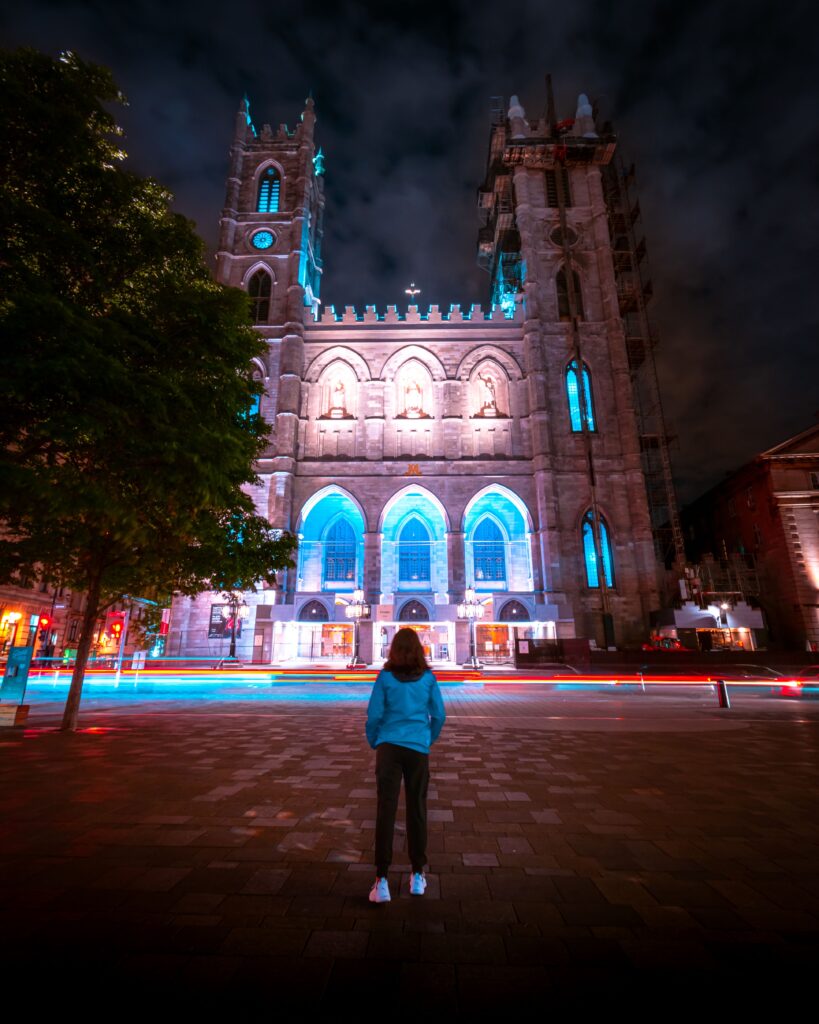
If you’re searching for things to do inMontréall, Canada, you’ve landed in one of the few cities on this continent that genuinely feel like they belong somewhere else. Montréal is Canada’s second-largest city and the largest French-speaking city in North America, and it wears that identity everywhere: on the street signs, in the smell of fresh bagels drifting out of wood-fired ovens, in the murals that cover entire building facades, and in the way locals will greet you with “Bonjour-Hi” before switching effortlessly to whichever language you respond in.
This guide covers 27 things to do in Montréal, organized so you can actually use it — not just skim it. You’ll find the unmissable landmarks, the food you’re not allowed to skip, the neighborhoods worth wandering without an agenda, the offbeat spots most first-timers never hear about, a full day-by-day itinerary, and answers to the questions people actually ask before booking a trip. Everything below reflects current 2026 information, including a few things that have changed recently (the Montréal Tower, for one — more on that shortly).
Whether you have a long weekend or a full week, here’s everything worth doing in Montréal.
Montréal at a Glance
| Category | Quick Facts |
| Best time to visit | June to September for festivals and warm weather; late September to mid-October for fall colors |
| Ideal trip length | 3 to 5 days for the highlights, a week or more for neighborhoods and day trips |
| Getting from the airport | STM Express Bus 747 (about 45-60 minutes) or taxi/rideshare (fixed rate, roughly 20-40 minutes) |
| Getting around | Metro (STM) plus walking; the city is very walkable in the core |
| Must-try foods | Poutine, Montreal-style bagels, smoked meat sandwiches |
| Currency | Canadian Dollar (CAD) |
| Language | French is the official and dominant language; English is widely spoken in tourist areas |
| Signature free experience | Sunday Tam-Tams drum circle on Mount Royal |
Best Time to Visit Montréal
Montreal genuinely has four distinct seasons, and each one changes what there is to do here.
Summer (June to August) is peak season and for good reason. This is when the Montréal International Jazz Festival, Just for Laughs, and the MURAL street art festival all take over the city, terraces spill onto every sidewalk, and Mount Royal fills with picnickers. It’s also the busiest and priciest time to visit.
Fall (September to October) brings some of the best weather of the year plus spectacular foliage, especially if you pair a Montréal trip with a day trip toward the Laurentians or Eastern Townships.
Winter (November to March) turns Montréal into a genuine winter city, with the Underground City becoming a lot more useful, ice skating in the Old Port, and a completely different, cozier atmosphere. If cold doesn’t bother you, this is when hotel prices drop the most.
Spring (April to May) is quieter and features maple sugar season, when you can visit a sugar shack (cabane à sucre) just outside the city.
For first-time visitors asking what to do in Montreal and when, June through September remains the easiest window: consistently good weather and the fullest calendar of events.
Getting to and Around Montréal
Montréal–Trudeau International Airport (YUL) sits about 20 kilometers from downtown. The cheapest and most reliable option into the city is the STM 747 Express Bus, which runs 24/7, connects directly to downtown, and works with regular transit fares. Taxis operate on a fixed flat rate from the airport (drivers must charge this rate by law), so ask upfront if you’re unsure.
Once you’re in the city, the STM Metro is clean and frequent, and it covers almost everywhere you’ll want to go, including Old Montréal, the Plateau, Mile End, and the Olympic Park area. A single fare covers unlimited transfers between metro and bus for 120 minutes, and an OPUS card is worth getting if you’re staying more than a couple of days. Combine metro rides with walking, since Old Montréal, the Plateau, Mile End, and downtown are all genuinely pedestrian-friendly — renting a car in the city itself is rarely worth it.
Things to Do in Old Montréal (Vieux-Montréal)
No list of things to do in Montréal, Canada is complete without starting here. Old Montréal is the historic core of the city, dating back to the 17th century, and it’s dense with cobblestone streets, horse-drawn calèches, and some of the city’s most photographed buildings.
1. Tour the Notre-Dame Basilica
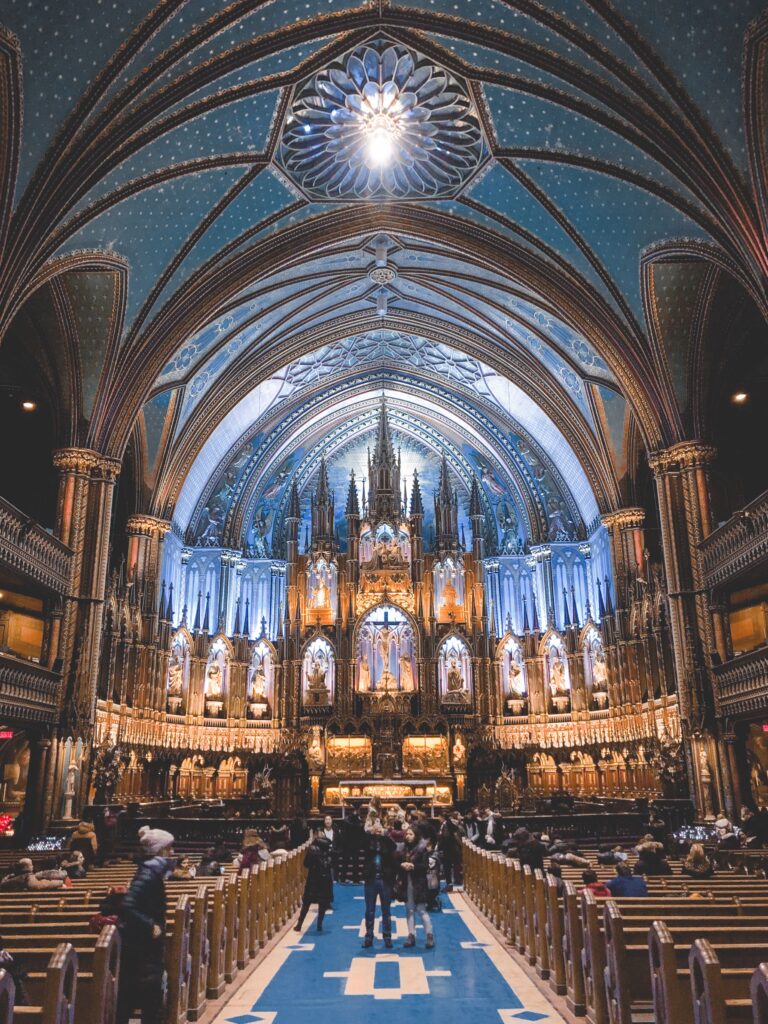
The single most visited religious site in Montréal, Notre-Dame Basilica is a Gothic Revival landmark completed in 1829, with a strikingly deep-blue vaulted ceiling, gold stars, and one of the largest pipe organs in North America. General admission tickets run in the neighborhood of $16 CAD for adults (with reduced pricing for students, seniors, and children), and the basilica is typically open to visitors Monday through Saturday from morning until mid-afternoon, with more limited Sunday hours around services. In the evenings, the AURA light and sound show transforms the interior into an immersive projection experience — book ahead, since it sells out on weekends. Because hours and pricing can shift around holidays and events, it’s worth checking the official Notre-Dame Basilica site before you go.
2. Wander the Old Port (Vieux-Port)
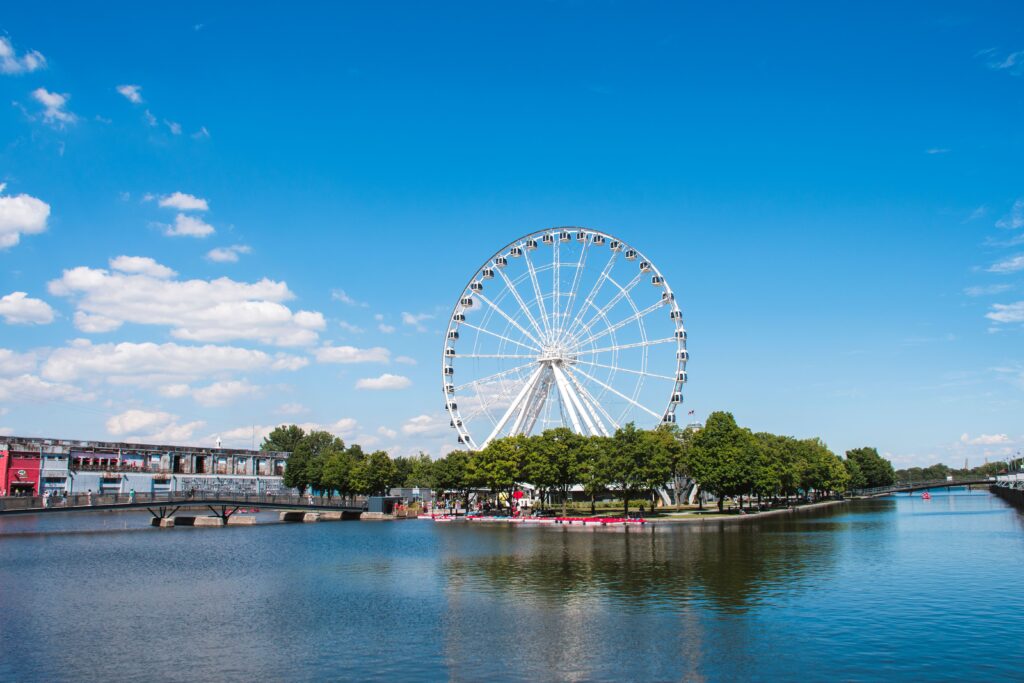
The Old Port stretches along the St. Lawrence River and is one of the liveliest things to see in Montréal, especially in summer. Ride La Grande Roue de Montréal, Canada’s tallest observation wheel, for sweeping views of the river and skyline. Below it, you’ll find a genuine mix of activities: an urban zipline, an aerial rope park, ice cream stands, and boat launches for river cruises and jet boat rides on the St. Lawrence rapids. In winter, part of the port converts into an outdoor skating rink.
3. Visit Pointe-à-Callière, Montréal’s Archaeology and History Museum
This is where the city was actually founded in 1642, and the museum is built directly over the archaeological remains — you can walk underground through preserved foundations, sewers, and a 19th-century collector sewer that once served as Montréal’s main storm drain. It’s consistently one of the most highly rated museums in the city for good reason: it makes 400 years of history tangible instead of abstract.
4. See the Sailor’s Chapel: Notre-Dame-de-Bon-Secours
Just a short walk from the basilica, this small chapel is one of Montréal’s oldest religious buildings, dating to 1655. Look up, andyou’lll notice model wooden ships hanging from the ceiling — offerings from sailors giving thanks for safe passage, which is why locals call it the “Sailor’s Church.” Climb the tower for one of the best free views over the Old Port.
5. Browse Bonsecours Market
A restored 19th-century building with a distinctive silver dome, Bonsecours Market now houses artisan boutiques, Québécois design shops, and galleries. It’s a good stop for souvenirs that are actually made locally rather than mass-produced.
6. People-Watch on Place Jacques-Cartier
This cobblestone square, lined with restaurant terraces, street performers, and flower vendors, is the social heart of Old Montréal. It gets touristy, but it’s touristy for a reason — grab a coffee, sit, and just watch the city move.
Mount Royal and the Great Outdoors
7. Hike Mount Royal Park
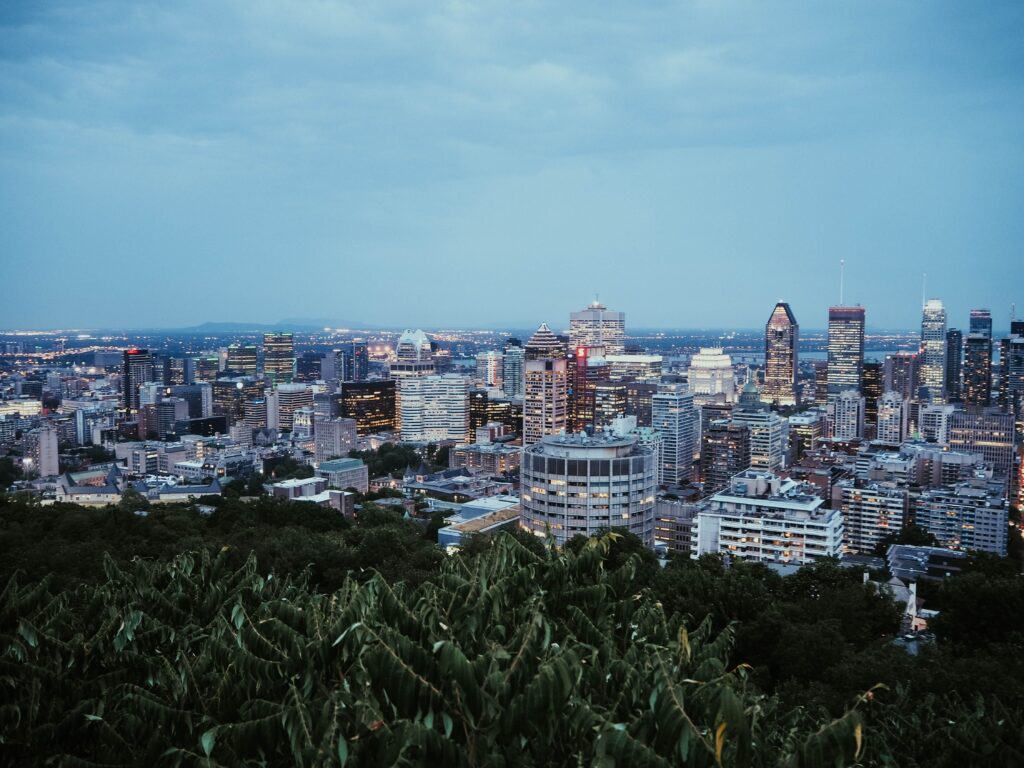
Frederick Law Olmsted — the same landscape architect behind New York’s Central Park — designed Mount Royal Park, and it’s the green heart of the entire city. Climb (or drive, or take a shuttle) up to the Kondiaronk Belvedere for the single best skyline view of downtown Montréal. The mountain has extensive walking trails, a small lake (Beaver Lake) with paddleboats in summer and skating in winter, and the Mount Royal Chalet, which houses murals and, if you look closely, a few hidden carved wooden squirrels tucked into the woodwork.
8. Join the Tam-Tams Drum Circle
Every Sunday from spring through fall, hundreds of drummers, dancers, and vendors gather informally at the base of Mount Royal near the George-Étienne Cartier monument for what’s known simply as the Tam-Tams. It’s free, unofficial, entirely spontaneous, and one of the most authentically Montréal things to do in the city — no ticket, no schedule, show up.
9. Visit St. Joseph’s Oratory
Sitting on the western slope of Mount Royal, St. Joseph’s Oratory is the largest church in Canada and one of the largest pilgrimage sites in the world dedicated to Saint Joseph. Its dome is one of the largest of its kind anywhere; the building is by law the only structure in Montréal permitted to rise above Mount Royal’s own height, and the interior mixes Renaissance Revival exteriors with Art Deco interiors. Guided tours run seasonally, and there’s a small museum with a nativity scene collection that most visitors skip entirely — worth the detour if you’re already there.
Space for Life: Montréal’s Nature Museum Complex
10. Explore the Montréal Botanical Garden
One of the largest botanical gardens in the world, with more than 20 thematic gardens ranging from Japanese and Chinese gardens to an alpine garden and a poisonous plant garden. The Chinese Lantern Festival and Gardens of Light in fall are seasonal highlights worth timing your visit around.
11. Walk Through the Biodome
Housed in the former Olympic velodrome, the Biodome recreates four ecosystems of the Americas under one roof — a tropical rainforest, the Laurentian maple forest, the Gulf of St. Lawrence, and sub-Antarctic islands — complete with free-roaming animals, including penguins and capybaras.
12. Get Up Close at the Insectarium
Recently rebuilt and reopened, the Montréal Insectarium is one of the most immersive insect museums in the world, with a walk-through vivarium where butterflies land directly on visitors.
13. Look at the Stars at the Planetarium
The Rio Tinto Alcan Planetarium runs immersive dome shows, including projections of the Northern Lights, making it a good rainy-day option regardless of season.
You can visit all four attractions individually or save with a combined Space for Life pass — worth it if you plan to see more than two.
A Quick Note on the Montréal Tower
You’ll see the Montréal Tower — the tallest inclined structure in the world at 165 meters, leaning at a dramatic 45-degree angle — mentioned constantly in older Montréal guides. As of 2026, the Tower’s observation deck is closed for major renovations, with reopening currently projected for spring 2027. You can still see and photograph the tower from outside, and the Olympic Stadium grounds around it remain open, but don’t plan a trip around riding to the top just yet. Check the official Parc Olympique site for the latest reopening timeline before you travel.
Museums and Culture
14. Spend an Afternoon at the Montréal Museum of Fine Arts
The MMFA is the largest art museum in Quebec and one of the most visited in North America, with collections spanning Canadian, Indigenous, and international art, as well as major touring exhibitions. The sculpture garden outside is free to wander through and offers one of the better vantage points for the nearby giant Leonard Cohen mural.
15. Hunt Down Montréal’s Iconic Murals
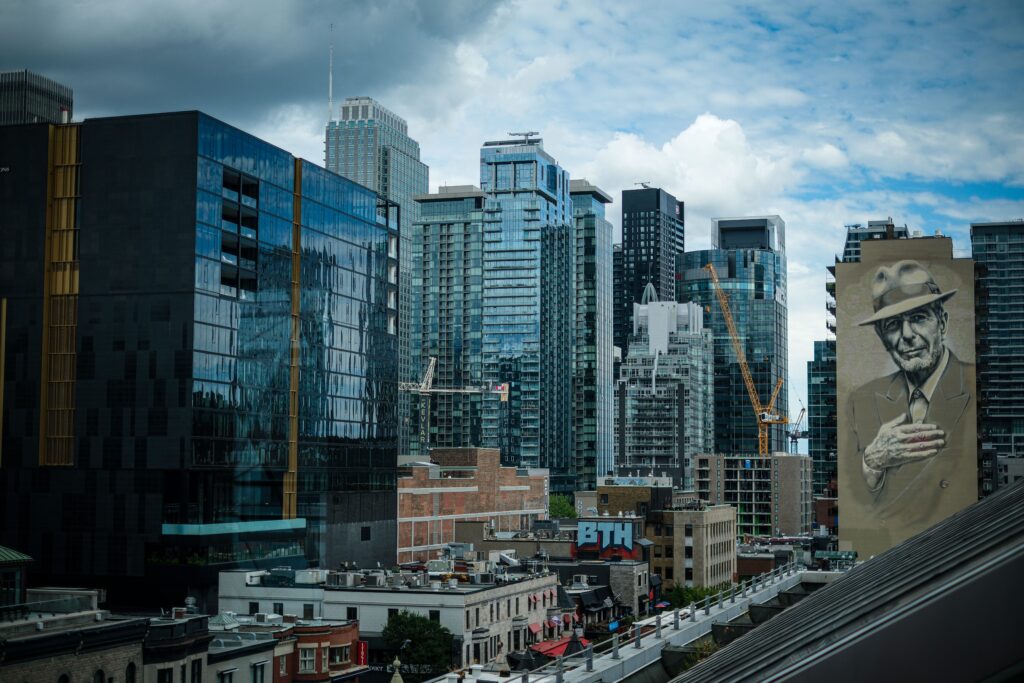
Montréal has embraced street art seriously over the past two decades. The giant Leonard Cohen mural downtown (visible from near the MMFA) is the city’s most-photographed piece of public art, and the Jackie Robinson mural on St. Laurent Boulevard pays tribute to his time with the Montréal Royals before breaking baseball’s color barrier. St. Laurent Boulevard itself — known locally as “The Main” — hosts the annual MURAL Festival each June and is lined with alleyway graffiti worth a slow wander, particularly around what locals call Graffiti Alley.
16. Explore Montréal’s Underground City
Officially called RÉSO, this network of more than 32 kilometers of tunnels connects downtown metro stations, shopping centers, hotels, and even a hockey arena — making it possible to spend an entire winter day indoors without ever stepping outside. It’s genuinely one of the largest underground complexes in the world and worth exploring even in summer just for the scale of it.
Neighborhoods Worth Exploring
17. Stroll Le Plateau-Mont-Royal
This is the neighborhood most visitors fall in love with without meaning to. Rows of brightly painted duplexes with distinctive exterior spiral staircases, the open-air street life along Mont-Royal Avenue, and quiet, leafy side streets make it ideal for aimless wandering. Early mornings here are peaceful; afternoons and evenings turn into an open-air party with public art, colorful benches, and packed restaurant terraces.
18. Wander Mile End and Little Italy
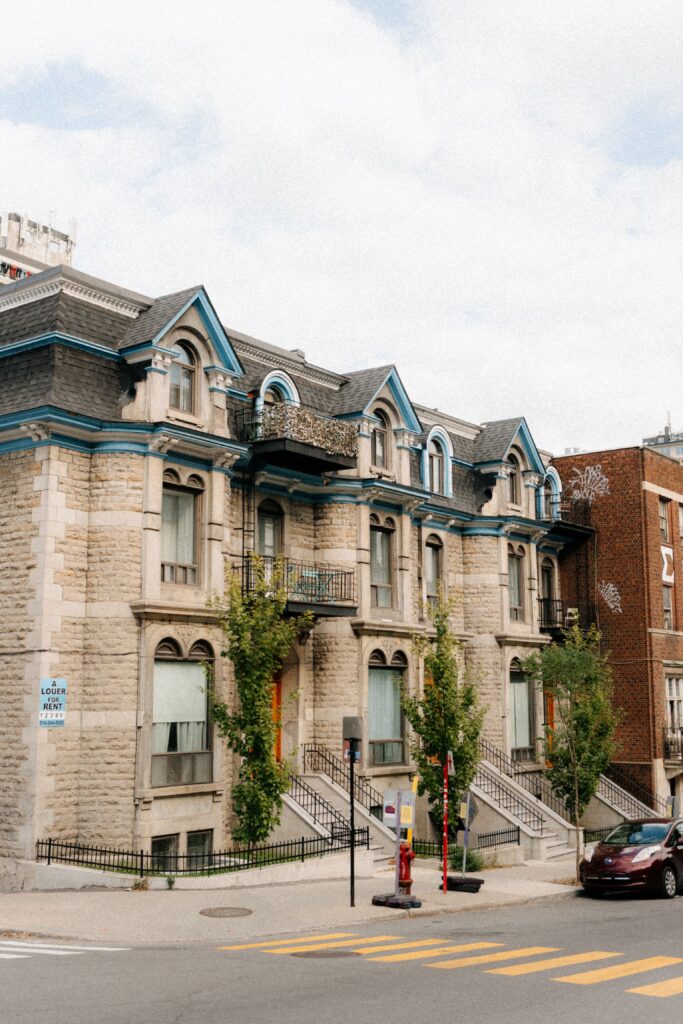
Home to Montréal’s famous bagel bakeries (more on that below), a thriving indie music and arts scene, and the Jean-Talon Market at its edge, Mile End rewards slow exploration. Little Italy, just next door, centers on the market and is full of small, family-run restaurants that don’t show up in most tourist guides.
19. Discover the Green Alleyways (Ruelles Vertes)
Since 1997, Montreal neighbors have been able to apply for grants to convert the unused laneways behind their homes into green, art-filled community spaces. There are now hundreds of these Ruelles Vertes across the city, most of them open to the public, and wandering into one — particularly around the Plateau — is a genuinely local experience most first-time visitors never stumble upon.
The Food Scene: What You Cannot Leave Montréal Without Eating
20. Eat Real Poutine
Fries, cheese curds, and gravy sounds simple until you’ve had it done right. La Banquise on the Plateau is the classic reference point, open 24 hours and offering dozens of poutine variations, including vegan options.
21. Get Montreal-Style Bagels, Fresh from a Wood-Fired Oven
Montreal bagels are boiled in honey water before being baked in wood-fired ovens, giving them a chewier texture and slightly sweeter flavor than New York-style bagels. Head to Mile End for the classic bakeries, where you can watch the entire process from dough to oven.
22. Try a Smoked Meat Sandwich
Montreal’s smoked meat tradition traces back to Eastern European Jewish immigrants in the early 20th century, and it’s as much a cultural institution here as a meal. The classic order is a smoked meat sandwich on rye with yellow mustard, and the lines at the city’s most famous deli on St. Laurent Boulevard start forming by mid-morning.
If you’re interested in the history behind legendary, decades-old restaurants, it’s worth reading our full guide to the oldest restaurant in the world, Sobrino de Botín in Madrid — a fascinating parallel to how food institutions like Montréal’s delis become woven into a city’s identity.
23. Shop the Jean-Talon Market
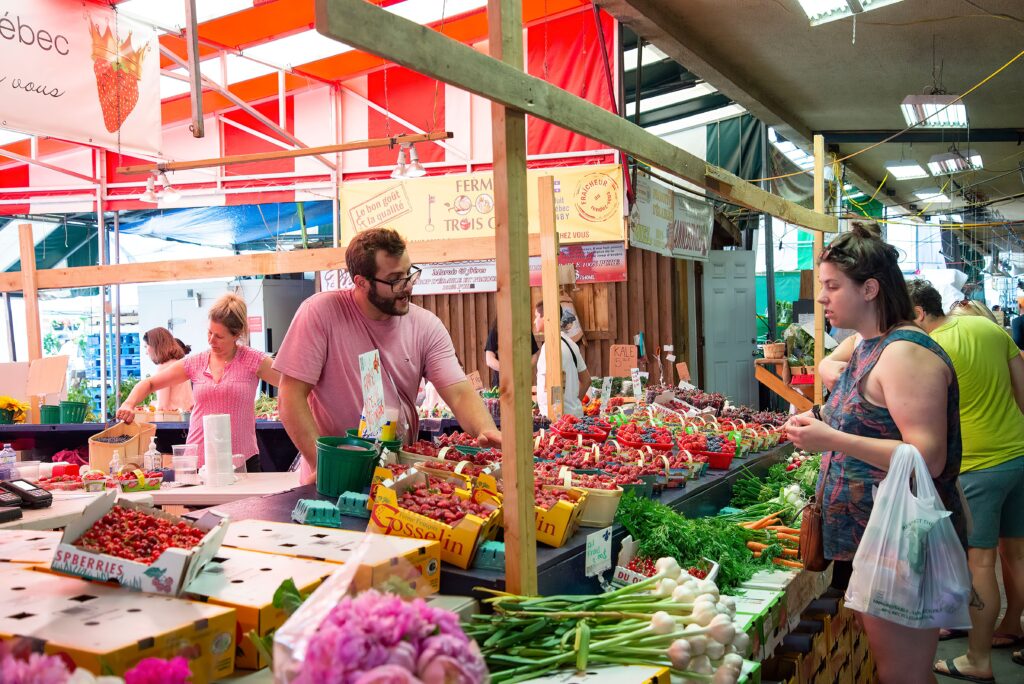
One of North America’s largest open-air markets, Jean-Talon Market sits in the middle of Little Italy and is packed with local produce, artisan Québécois food products, cheese, and maple products year-round. It’s a better food souvenir stop than any downtown gift shop.
Festivals: Time Your Trip Right
24. Catch a World-Class Festival
Montreal’s festival calendar is dense enough to build an entire trip around:
- The Montréal International Jazz Festival (late June/early July) is one of the largest jazz festivals in the world, with many outdoor stages free to attend.
- Just for Laughs (July) is the biggest comedy festival on the planet, drawing major international names alongside emerging comics.
- The MURAL Festival (June) fills St. Laurent Boulevard with new large-scale street art and live painting.
- Montréal is also the birthplace of Cirque du Soleil, and its summer circus festival brings free public performances throughout the city.
- Igloofest (January) proves Montréal doesn’t slow down for winter, with outdoor electronic music sets in sub-zero temperatures.
Offbeat and Unusual Things to Do in Montreal
If you’ve already done the highlights or you’re looking for something a little different, these are worth seeking out.
25. See Habitat 67
Built for Expo 67, Habitat 67 is a landmark of brutalist architecture — a stacked concrete housing complex that looks like nothing else in the city. It’s now a protected heritage site, and units here still sell for well over a million dollars. Guided tours are available, and the permanent artificial wave nearby (a popular river-surfing spot) is worth watching even if you don’t get in the water.
26. Visit the Barbie Expo
A genuinely surprising find near Peel metro station: a free, permanent display of over 1,000 Barbie dolls in designer outfits from Versace to Dior. It’s one of the largest Barbie collections in the world, and it costs nothing to walk through.
27. Take a Ghost Tour of Old Montréal
Rather than a standard walking tour, an evening ghost tour through Old Montréal’s oldest streets covers the city’s darker history — reputedly haunted buildings, mysteries, and colorful local legend — and runs about 90 minutes.
Bonus: Hockey fans should catch a Montréal Canadiens game at the Bell Centre during the season — it’s the closest thing Canada has to a religious experience.
Day Trips from Montréal
If you have extra time, Montréal makes an excellent base for exploring further afield. Quebec City is about a 3-hour drive northeast and worth an overnight if you can manage it. The Laurentian Mountains, roughly an hour north, offer hiking in summer and skiing in winter. And in spring, cabane à sucre (sugar shack) visits just outside the city let you watch maple syrup made the traditional way, followed by a hearty traditional meal.
If you’re building out a bigger North American itinerary and want inspiration from another walkable, culture-dense city guide, our Merida, Mexico guide follows a similar structure and might be useful for planning your next stop.
Where to Stay in Montréal
Most visitors base themselves Downtown, in Old Montreal, or in the Plateau — all are within walking distance of major sights and close to metro stations.
| Budget | Area Recommendation |
| Luxury | Old Montreal or the Golden Square Mile, near the MMFA and downtown shopping |
| Mid-range | The Plateau or Mile End, for a more local, walkable feel |
| Budget | Verdun, one metro stop from downtown with a strong local food scene |
Wherever you stay, aim to be within a few blocks of a metro station —Montréal’ss public transit makes almost any neighborhood a viable base.
Montreal Practical Tips: Budgeting Your Trip
| Expense | Approximate Cost (CAD) |
| Metro single fare | Under $4, with unlimited transfers for 120 minutes |
| Notre-Dame Basilica admission | Around $16 for adults |
| Casual meal (poutine, sandwich) | $12-20 |
| Mid-range dinner for two | $60-100 |
| Budget hotel/hostel per night | $60-120 |
| Mid-range hotel per night | $150-250 |
A few practical notes: sales tax is added at the register and not included in listed prices, so factor that in when budgeting. Tipping follows US-style norms — 15-20% at restaurants. AndMontréall is walkable enough in the core neighborhoods that you genuinely don’t need a car.
Suggested 3-Day Montreal Itinerary
Day 1 — OldMontréall and the Port: Notre-Dame Basilica in the morning, lunch near Place Jacques-Cartier, afternoon at Pointe-à-Callière, evening wandering the Old Port and riding La Grande Roue.
Day 2 — Mount Royal and the Plateau: Morning hike up Mount Royal to Kondiaronk Belvedere, lunch in the Plateau, afternoon exploring murals and green alleyways, evening poutine at La Banquise.
Day 3 — Mile End, Museums, and Markets: Morning bagels in Mile End, late morning at Jean-Talon Market, afternoon at the Montreal Museum of Fine Arts or Space for Life, evening on St. Laurent Boulevard.
If you have a fourth or fifth day, add St. Joseph’s Oratory, the Botanical Garden, and a day trip toward the Laurentians.
Frequently Asked Questions About Things to Do inMontréall Canada
How many days do you need inMontréall?
Three to five days comfortably cover the major highlights. If you want to add museums, neighborhood exploration, and a day trip, plan for a full week.
IsMontréall expensive to visit?
Montreal is moderately priced by North American standards — generally less expensive than Toronto or Vancouver, and noticeably cheaper than most major US cities. Costs rise quickly if you stick to tourist-zone restaurants, so eating where locals eat makes a real difference.
Do I need to speak French to visit Montreal?
No. Montréall is bilingual, and most people working in tourism, hospitality, and retail speak both French and English. That said, locals appreciate a simple“Bonjour” or “Merci,” and it goes a long way.
Is Montréal walkable?
Yes, especially Old Montréal, the Plateau, Mile End, and downtown. Combined with the metro system, most visitors never need a car.
What is Montréal best known for?
Montréal is best known for its French-Canadian culture, its food (poutine, bagels, and smoked meat), its street art and murals, Mount Royal Park, and its year-round festival calendar, including the Montréal Jazz Festival and Just for Laughs.
Is the Montréal Tower open in 2026?
No, the Montréal Tower’s observation deck is currently closed for renovation, with a projected reopening in spring 2027. Check the official Parc Olympique website before planning a visit around it.
What is the best time of year to visit Montréal?
June through September offers the warmest weather and the fullest festival calendar. Late September through mid-October brings excellent weather and fall colors, while winter (December through February) offers a completely different, festive atmosphere for those who don’t mind the cold.
Final Thoughts: Making the Most of Montréal
What makes Montréal genuinely stand out isn’t any single attraction — it’s how much the city rewards unstructured time. Some of the best things to do in Montréal aren’t on any official list at all: an unplanned turn into a green alleyway, a Sunday afternoon at the Tam-Tams, or simply picking a direction in the Plateau and walking until you’re hungry.
Use the itinerary above as a framework, but leave room to wander. Between the food, the murals, the mountain, and the sheer density of culture packed into a walkable core, Montréal tends to earn a second visit almost every time.
If you’re planning more of your North America and Caribbean travels this year, take a look at our guides to things to do in Puerto Rico and things to do in St Lucia — both make excellent add-ons if you’re routing through the region.