
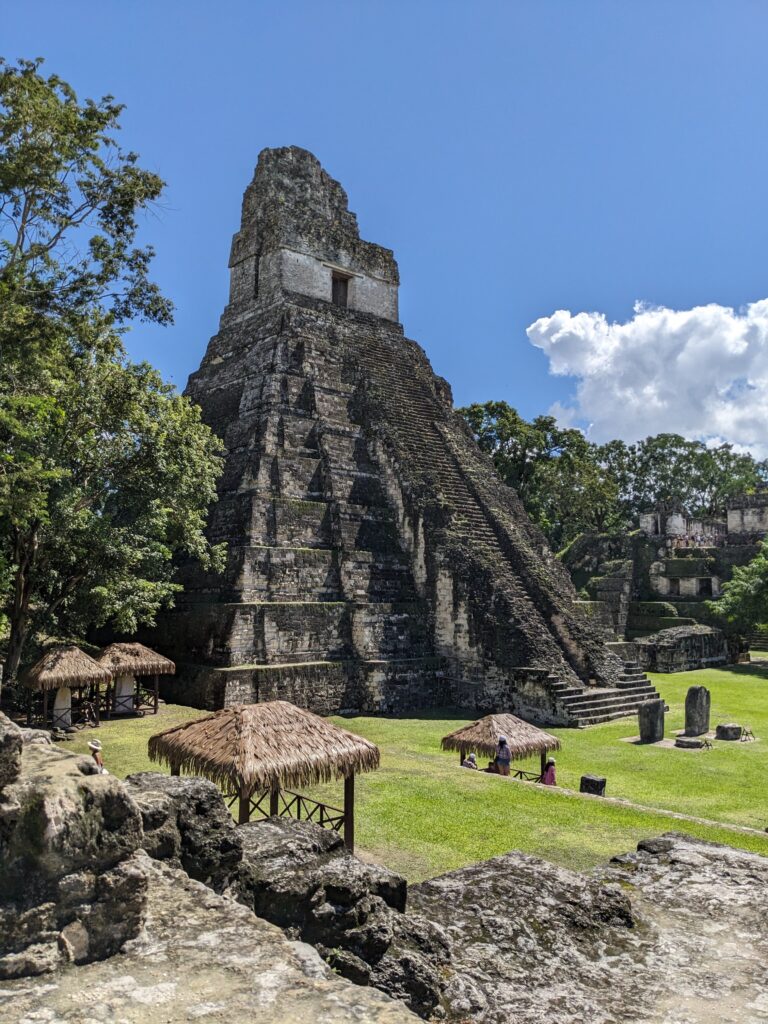
Tikal National Park, Tikal, is the single most jaw-dropping place I have ever stood still and just stared. One moment you’re walking down a shaded jungle trail listening to what sounds like a dinosaur growling in the canopy (that’s just a howler monkey, promise), and the next you step out into the Great Plaza and see two 1,300-year-old limestone pyramids staring back at you across a clearing. There is genuinely nowhere else on Earth quite like it.
If you’re planning a trip to Guatemala, you’ve probably already realized that “just visit Tikal” is easy to say but a lot more complicated to actually plan. Which ticket do you need? Do you really need a guide? Is staying inside the park or going to Flores better? Is sunrise worth the 3:30 a.m. wake-up call? I’ve dug into every angle so you don’t have to guess, and by the end of this guide you’ll know exactly how to plan your visit to Tikal National Park, Tikal, from the ticket booth to the top of Temple IV.
What Is Tikal National Park?
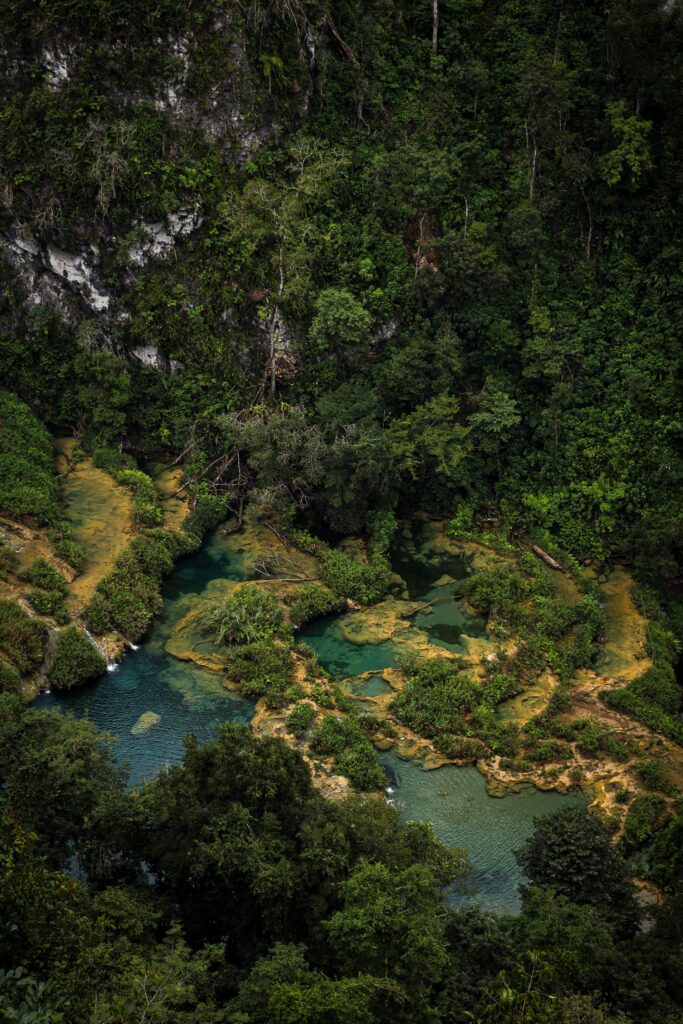
Tikal National Park is a 222-square-mile (575-square-kilometer) protected area of tropical rainforest in the Petén region of northern Guatemala, built around the ruins of Tikal — once one of the largest and most powerful cities of the ancient Maya world. At its peak during the Classic Period (roughly 200 to 900 AD), the city was home to an estimated 100,000 people. It dominated trade and politics across a huge stretch of what’s now Mexico, Belize, and Honduras.
Today, the park protects both the archaeological site and the surrounding jungle, and it’s one of the very few places on the UNESCO World Heritage List recognized for both its cultural and natural values. That combination is really the whole story of Tikal: it’s not a museum behind glass; it’s a living rainforest that happens to be full of 1,000-year-old pyramids.
Quick Facts Table: Tikal National Park at a Glance
| Fact | Detail |
|---|---|
| Location | Petén Department, northern Guatemala |
| Park size | 575 sq km (222 sq mi) |
| Nearest town | Flores / Santa Elena (about 64 km / 40 mi away) |
| Founded as national park | May 26, 1955 |
| UNESCO World Heritage status | Inscribed in 1979 (mixed cultural and natural site) |
| Number of known structures | Over 3,000 in the 16 sq km core zone |
| Percentage excavated | Roughly 15% |
| Tallest temple | Temple IV, about 70 meters (230 ft) |
| Opening hours | 6:00 a.m. to 6:00 p.m. daily (sunrise/sunset tickets extend this) |
| Standard entry fee (2026) | Q150 (about US$20) for foreign visitors |
Where Is Tikal Located?
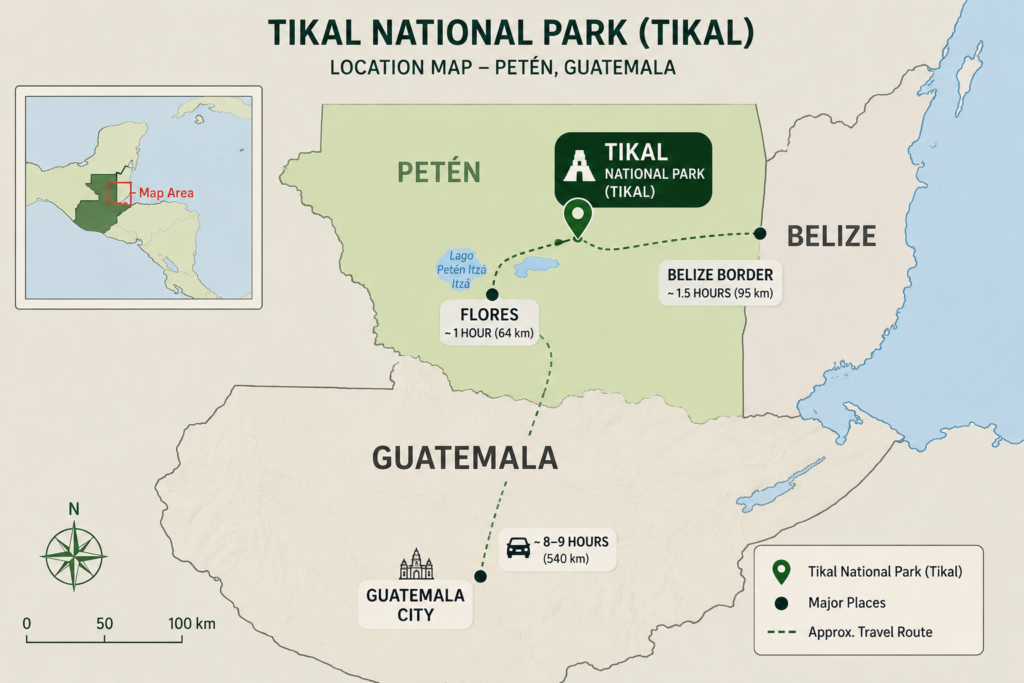
Tikal lies deep within the lush Petén rainforest in northern Guatemala, close to the borders of Belize and Mexico. As one of the largest and most important ancient Maya cities, it’s a destination that requires planning rather than a quick stop along the way.
The nearest town is Flores, a picturesque island city on Lake Petén Itzá, located about 64 kilometers (40 miles) southwest of Tikal. The drive from Flores to the park takes approximately 1 to 1.5 hours, making it the most popular base for visitors. Flores is also home to Mundo Maya International Airport (FRS), with regular domestic flights from Guatemala City, allowing travelers to avoid the long overland journey.
If you’re traveling from Guatemala City, Tikal is approximately 530 kilometers (329 miles) away by road, and the drive typically takes 8–10 hours depending on traffic and road conditions. Because of the distance, many travelers prefer flying to Flores before continuing to the park.
Visitors coming from Belize also have convenient access. San Ignacio, in western Belize, is about 2–3 hours from Tikal by road via the Melchor de Mencos border crossing, making Tikal a popular day trip or overnight excursion from Belize.
This strategic location, surrounded by tropical rainforest yet easily accessible from both Guatemala and Belize, makes Tikal National Park one of the most rewarding archaeological destinations in Central America.
The History of Tikal: From Jungle Village to Maya Superpower
You don’t need to be a history buff to appreciate Tikal, but knowing the backstory changes the way you see every stone.
The Rise of an Ancient City
Archaeologists believe people first settled in the area around 900 BC, during the Middle Preclassic period. Over the following centuries, that small settlement grew into a major ceremonial and trading hub. By the Classic Period, Tikal had become one of the dominant kingdoms in the Maya world, engaging in alliances, rivalries, and outright wars with other great cities such as Calakmul in modern-day Mexico and Caracol in modern-day Belize.
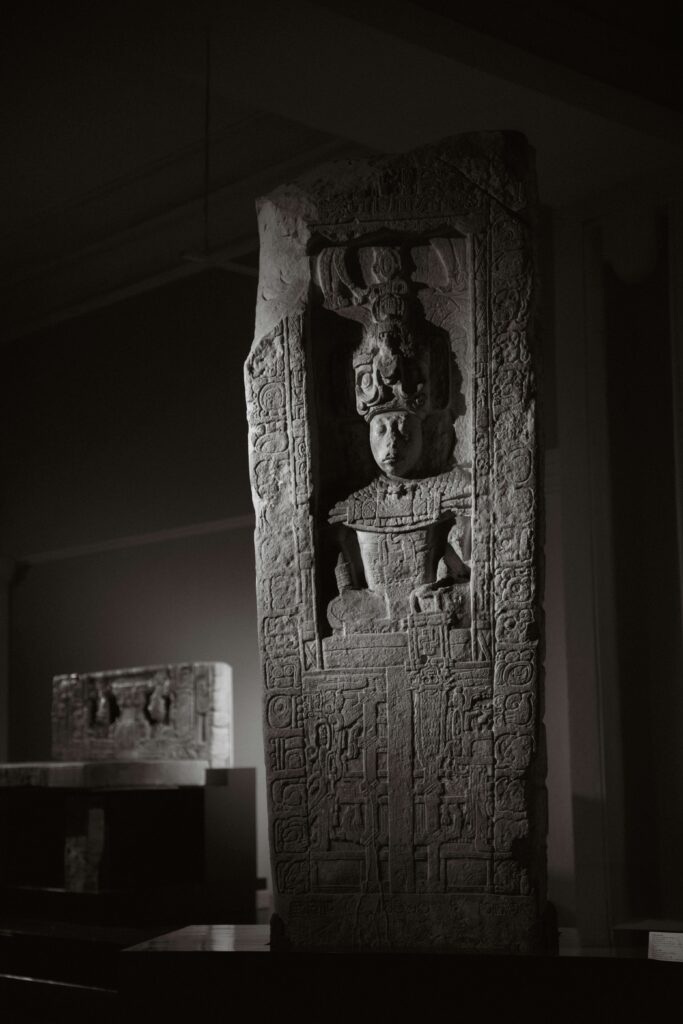
The ancient name for the city wasn’t even “Tikal.” Hieroglyphic inscriptions found on-site refer to it as Yax Mutal. “Tikal” is a much more recent label, likely derived from the Yucatec Maya phrase ti ak’al, meaning “at the waterhole” — a nod to the city’s ancient water reservoirs.
The Golden Age
Most of the monumental temples you’ll see today, including the iconic Temple I, were built in the 8th century AD under rulers such as Jasaw Chan K’awiil I. At this point, Tikal is thought to have supported a population of close to 100,000 people, an extraordinary number for a jungle city with no rivers running through its core.
Abandonment and Rediscovery
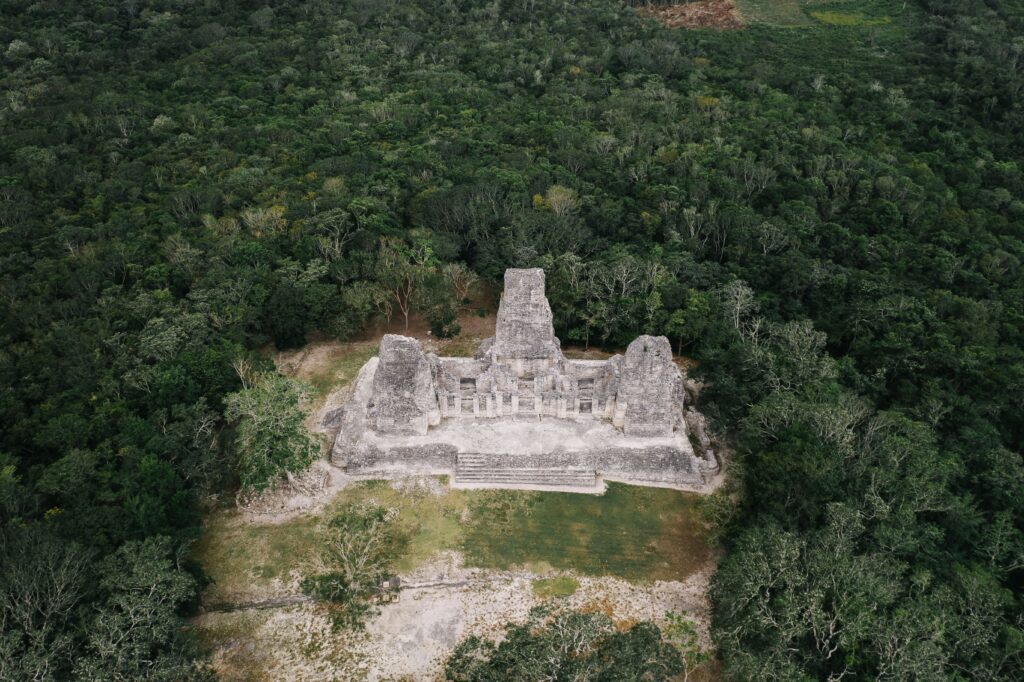
By the end of the 9th century, Tikal was largely abandoned. The exact reasons are still debated among historians — likely culprits include prolonged drought, deforestation, overpopulation, and internal political collapse. Whatever the cause, the jungle patiently swallowed the city whole for close to a thousand years.
Spanish conquistador Hernán Cortés reportedly passed within miles of Tikal in 1525 and never even noticed it, hidden as it was beneath a dense canopy of mahogany, cedar, and ceiba trees. It wasn’t until 1848 that a Guatemalan government expedition officially “rediscovered” the ruins, and serious excavation didn’t begin until the University of Pennsylvania’s Tikal Project launched in 1956, running through 1970 and uncovering the scale of the city we recognize today.
Only around 15% of Tikal has actually been excavated. Everything else — potentially tens of thousands of additional structures identified in recent LiDAR (laser-mapping) surveys of the wider Petén region — remains hidden beneath the jungle floor.
Tikal’s UNESCO World Heritage Status
Tikal National Park was inscribed on the UNESCO World Heritage List in 1979. It holds a genuinely rare distinction: it’s one of only a handful of sites in the world recognized for both cultural criteria (as an extraordinary example of Maya architecture and urban planning) and natural criteria (for the surrounding rainforest’s exceptional biodiversity). According to the official UNESCO World Heritage Centre listing, Tikal was declared a national monument in 1931 and a national park in 1955, making it one of Guatemala’s very first protected areas.
In 1990, the much larger Maya Biosphere Reserve was established around Tikal, connecting it to conservation areas across the border in Belize and Mexico and protecting one of the largest remaining tracts of tropical rainforest in the Americas.
Best Time to Visit Tikal National Park
Guatemala’s Petén region has two seasons that matter for planning: dry and wet.
| Season | Months | What to Expect |
|---|---|---|
| Dry season | November to April | Best trail conditions, less mud, more reliable sunrise/sunset views |
| Peak heat | March to April | Can hit up to 37°C (99°F); bring extra water |
| Rainy season | May to October | Lush green jungle, fewer crowds, but muddy trails and slippery temple steps |
The dry season, especially November through February, is generally considered the best time to visit Tikal National Park because temperatures are a little more manageable and the ancient causeways aren’t turned into mud pits. That said, the rainy season has its own charm: the jungle is at its most vivid green, wildlife sightings can actually increase as animals move to find food, and you’ll share the ruins with noticeably fewer tourists.
Whatever month you go, mornings are almost always cooler and quieter than afternoons, which is one of several reasons an early start is worth the effort (more on that below).
How to Get to Tikal National Park
There’s no single “correct” route to Tikal — it depends on where your trip starts.
| Starting Point | Best Route | Approx. Time | Approx. Cost |
|---|---|---|---|
| Flores / Santa Elena | Shuttle, tour van, or taxi | 1–1.5 hours | Q60–Q500 depending on transport type |
| Guatemala City | Domestic flight to Flores, then shuttle | Flight ~1 hour + 1-hour drive | Flight + shuttle fees |
| Guatemala City (overland) | Overnight bus to Flores | 7–10 hours | Q80–Q300 |
| Antigua / Lake Atitlán | Tourist shuttle to Flores | 8–10 hours (often overnight) | Q200–Q400 |
| San Ignacio, Belize | Cross border, then shuttle or tour | 2–3 hours | Varies by tour operator |
Flying vs. Driving
Because Tikal sits so far from Guatemala’s other major highlights, most travelers fly into Flores from Guatemala City rather than enduring the full overland journey. It’s a short, inexpensive domestic flight, and it frees up an extra day or two for Tikal itself, rather than burning them on a bus.
Crossing from Belize
If you’re backpacking through Belize, particularly around San Ignacio, Tikal is an easy add-on. Several tour companies run day trips that handle the border-crossing paperwork for you, or you can cross independently at the Melchor de Mencos/Benque Viejo border and arrange onward transport from there.
Tikal National Park Tickets and Prices (2026)
This is where most first-time visitors get confused, so let’s break it down clearly.
| Ticket Type | Valid Hours | Price (Foreign Visitors) | Guide Required? |
|---|---|---|---|
| Standard day ticket | 6:00 a.m.–6:00 p.m. | Q150 (~US$20) | No |
| Sunrise ticket (add-on) | 4:00–6:00 a.m. | Additional Q100 (~US$13) | Yes |
| Sunset ticket (add-on) | 5:00–8:00 p.m. | Additional Q100 (~US$13) | Yes |
| Museum entry (Sylvanus Morley + Lithic Museum) | During park hours | Q30 per person, cash only, on-site | No |
| Children under 10–12 (varies) | — | Free | No |
A few important notes on Tikal National Park tickets:
- Standard entry tickets can be purchased through the official Guatemalan Ministry of Culture and Sports ticketing portal, at Bantrab bank branches nationwide, or at the park entrance. Payment policies (including which cards are accepted online) change periodically, so it’s worth confirming current options shortly before your trip.
- Sunrise and sunset access always require an authorized guide — you legally cannot enter the park outside standard hours without one, since it’s genuinely easy to get lost or injured on the jungle paths in low light.
- If you arrive after 3:00 p.m., your day ticket is sometimes valid into the following day as well, though this policy has changed over the years, so always confirm current rules when you book.
- There are no ATMs inside the park, so bring enough Guatemalan quetzales in cash, especially for museum entry and any guide tips.
If you want to do both sunrise and sunset in the same visit, plus a standard day ticket, budget around Q350–Q500 (roughly US$45–$65) per person once you add in the cost of a guide.
The Top Things to See Inside Tikal National Park
Tikal is enormous, and you will not see all of it in one visit — nobody does. Here are the highlights you genuinely shouldn’t skip.
The Great Plaza (Gran Plaza)
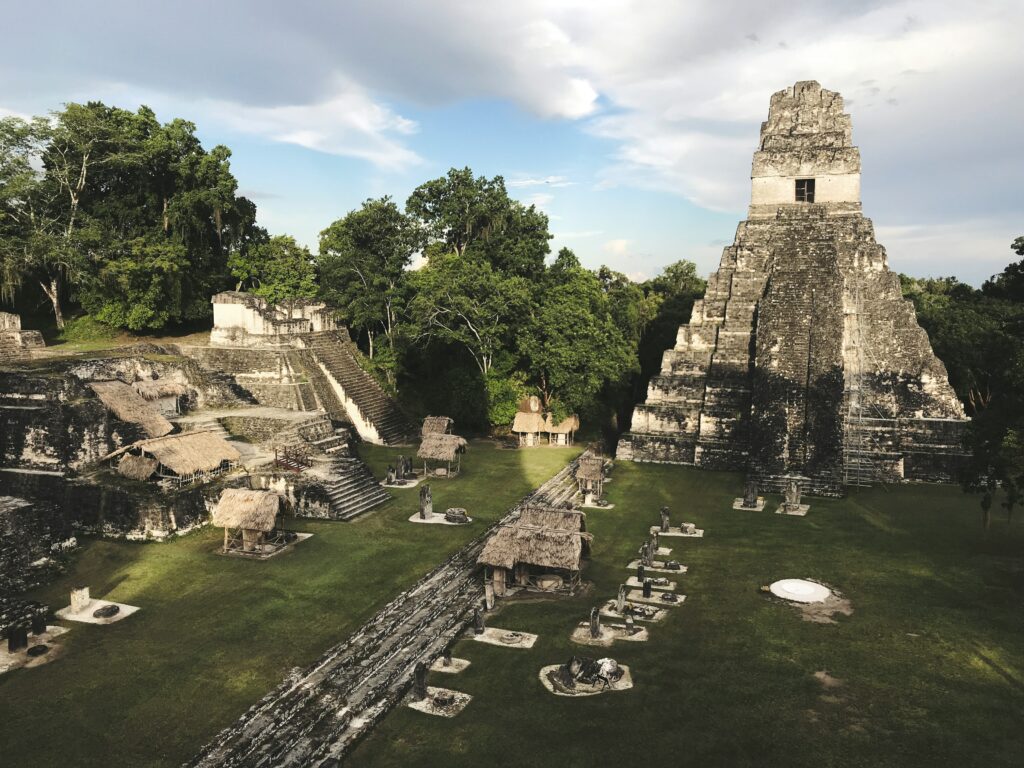
The heart of the ancient city and almost certainly the first “wow” moment of your visit. The Great Plaza is flanked by Temple I on one side and Temple II on the other, with the North Acropolis and Central Acropolis completing the square. This is the classic postcard image of Tikal.
Temple I — Temple of the Great Jaguar
Rising 47 meters (154 ft), Temple I was built as a funerary monument for the ruler Jasaw Chan K’awiil I. It’s the single most photographed structure in Tikal, though climbing it is no longer permitted for preservation reasons.
Temple II — Temple of the Masks
Directly across the plaza from Temple I, Temple II was built by the same ruler in honor of his wife. Visitors can climb a wooden staircase partway up for one of the best views of Temple I across the plaza.
Temple IV — The Tallest Temple in the Maya World
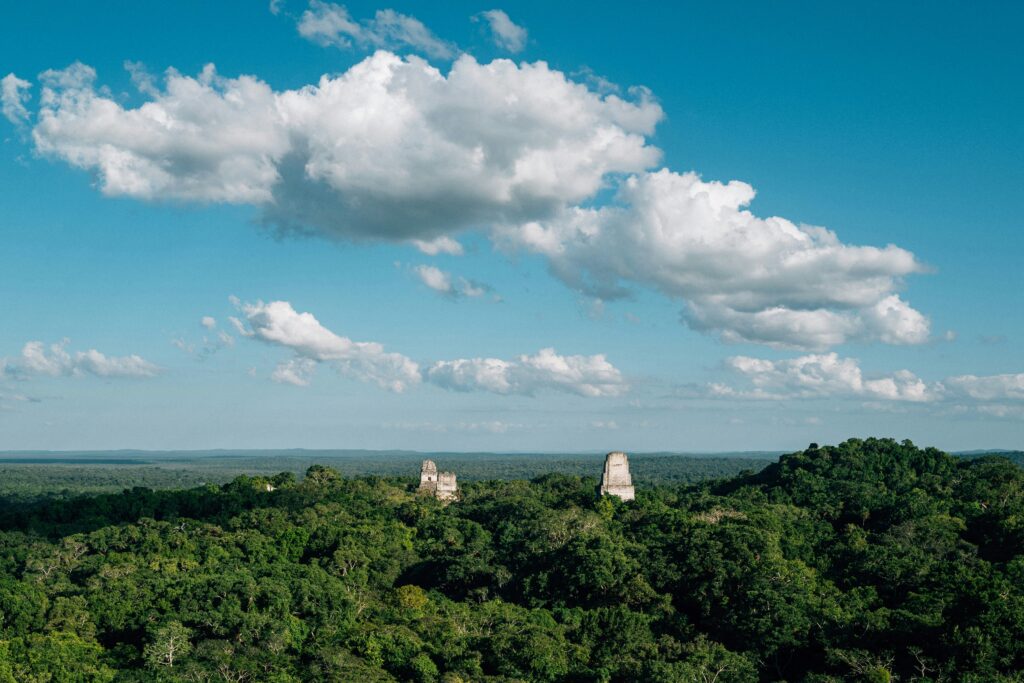
At around 70 meters (230 ft), Temple IV is the tallest known pyramid built by the ancient Maya. Climbing to the top (via a modern wooden staircase) rewards you with a view over the jungle canopy that’s genuinely one of the best sights in Central America — you can see the tops of Temples I, II, and III poking through a sea of green. This is also the classic spot for sunrise tours.
Mundo Perdido (Lost World Complex)
Home to some of the oldest structures on the site, the Lost World Complex is a large pyramid surrounded by smaller platforms, believed to have served astronomical functions for the ancient Maya. It’s also a favorite for sunset tours.
North Acropolis and Central Acropolis
Two sprawling complexes of temples, tombs, courtyards, and palace structures. The North Acropolis, in particular, contains some of the earliest and most architecturally layered construction at Tikal, with buildings stacked atop earlier structures over centuries.
Temple V and Temple VI
Temple V is one of the tallest structures on site and was only fully restored relatively recently. Temple VI, also called the Temple of the Inscriptions, is set apart from the main plaza and features a large carved hieroglyphic panel on its rear.
Wildlife You’ll See at Tikal National Park
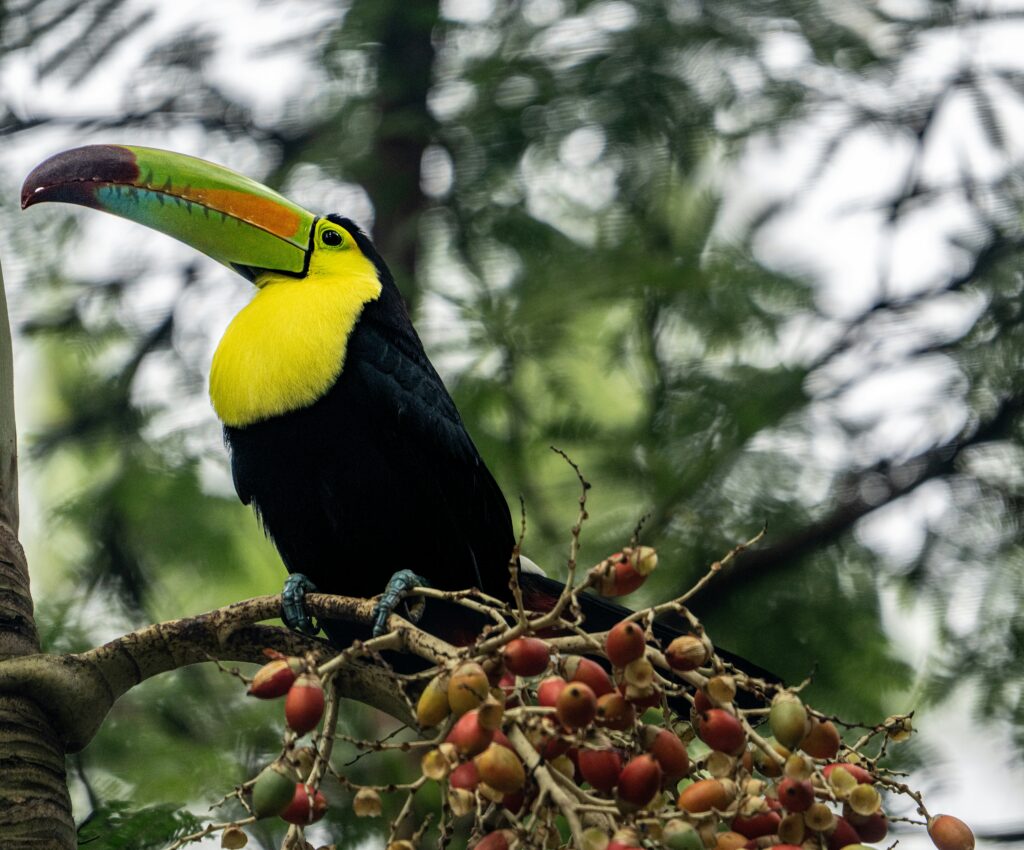
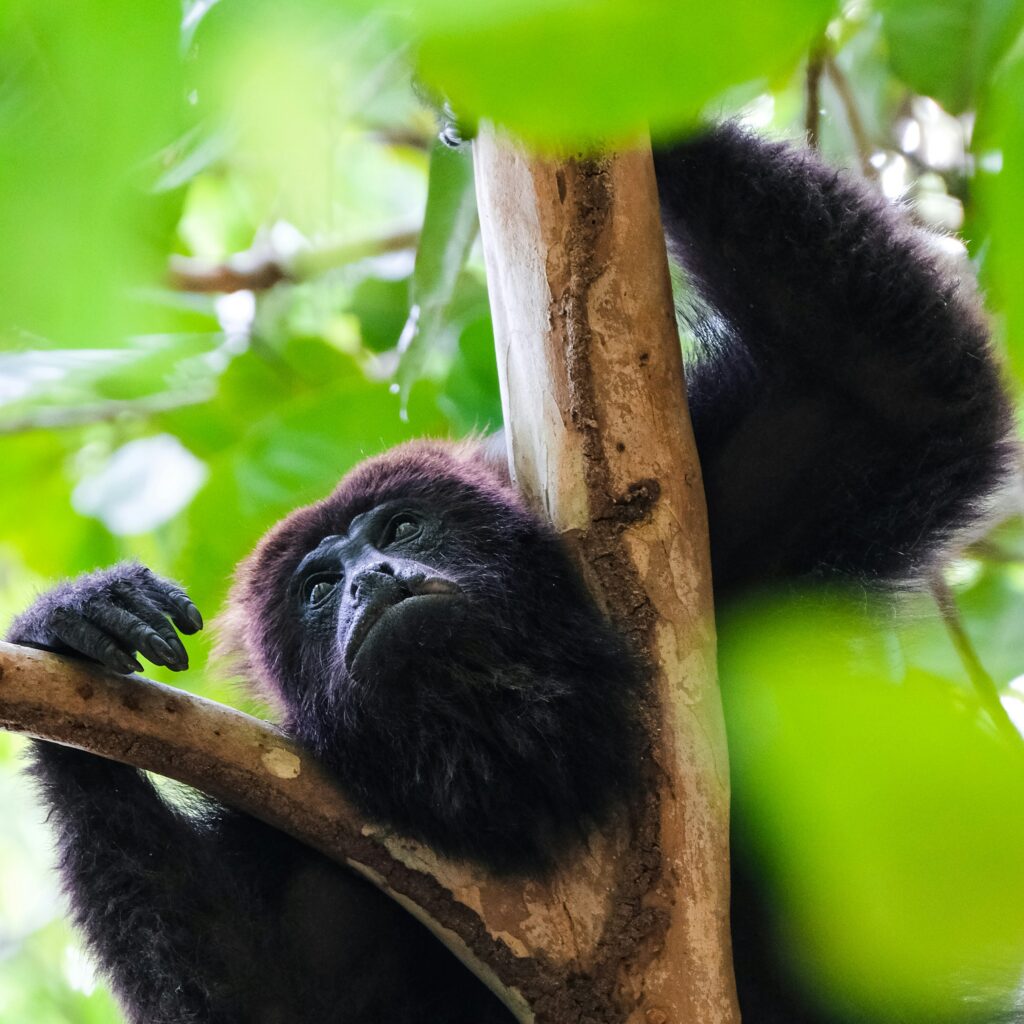
Tikal isn’t just an archaeological site; it’s a thriving ecosystem, and for many visitors, the wildlife is just as memorable as the ruins.
Keep an eye (and ear) out for:
- Howler monkeys — you’ll hear them long before you see them; their roar can carry over a mile through the jungle.
- Spider monkeys — often spotted swinging through the canopy near the main plazas.
- Toucans and keel-billed toucans — a genuine treat for photographers.
- Ocellated turkeys — a strikingly colorful bird found almost nowhere else, often wandering casually near the ruins.
- Coatimundis — raccoon-like mammals that hang around the entrance and picnic areas; they’re cute, but don’t feed them and keep an eye on your bag.
- Jaguars, pumas, and ocelots — present in the park but extremely elusive; spotting one is rare and unforgettable.
With over 300 recorded bird species and dozens of mammal species, Tikal National Park is as much a wildlife destination as it is a historical one. Early morning and late afternoon are consistently the best windows for sightings, since most animals retreat to shade during the hottest hours of the day. If wildlife watching is a priority for you, mention it to your guide at the start of the tour — experienced local guides often know exactly which trails have had recent monkey or bird activity and can adjust your route accordingly.
Photography Tips for Tikal National Park
Tikal is one of the most photogenic places in Central America, but the light and conditions can be tricky if you’re not prepared.
- Shoot early. The soft, golden light right after sunrise (and the mist that often lingers over the canopy) makes for dramatically better photos than the harsh midday sun.
- Bring a wide-angle lens if you have one. Temples like Temple IV and the Great Plaza are big enough that a standard lens can struggle to capture the full scale.
- Pack a dry bag or rain cover for your camera during the wet season — sudden downpours are common even on otherwise sunny days.
- Be patient with wildlife shots. Howler and spider monkeys move quickly through the canopy, so a longer lens (200mm or more) helps enormously.
- Drones are not permitted anywhere inside Tikal National Park to protect nesting birds and other wildlife, so leave them at home or in your hotel room.
Where to Stay Near Tikal National Park
You’ve really got two main options: stay inside the park itself, or base yourself in nearby Flores.
| Option | Pros | Cons |
|---|---|---|
| Hotels inside Tikal National Park (Jungle Lodge, Tikal Inn, Tikal Campground) | Easiest access to sunrise/sunset tours, wake up to howler monkeys, no early shuttle needed | Limited wifi/phone signal, fewer dining options, pricier |
| Flores / Santa Elena | Wide range of budgets, better food and nightlife, easy onward travel | Longer travel time to reach sunrise tours, more logistics |
If seeing the sunrise from Temple IV is a priority for you, staying inside the park (even just one night) removes a huge amount of stress, since you won’t need to leave a hotel in Flores at 3 a.m. to make it in time. If your budget is tighter or you want a livelier base with more restaurants, Flores is the better call, and it’s still an easy day trip away.
Sunrise vs. Sunset at Tikal: Which Should You Choose?
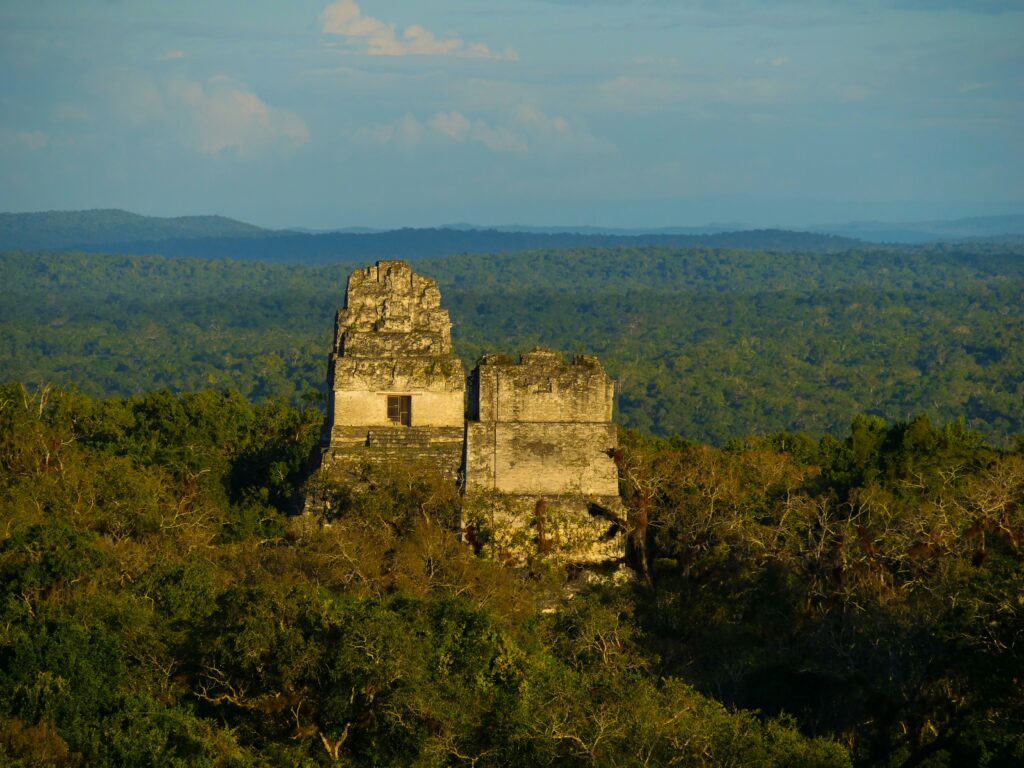
Both tours require an additional ticket and a certified guide, so it’s worth considering which one suits your trip.
Sunrise Tours
Guides typically lead groups to the top of Temple IV starting around 4:00 a.m., ahead of the standard 6:00 a.m. opening. As the light spreads across the canopy, the jungle genuinely wakes up around you — howler monkeys, birds, and insects all join in. It’s often misty, which some people love for the atmosphere, and others find frustrating if they wanted a clear photo.
Sunset Tours
Sunset tours usually head to Mundo Perdido or Temple IV in the late afternoon, watching the light fade over the jungle before the nocturnal sounds take over. Because there’s less pressure to arrive in pitch darkness, sunset tours tend to feel a little more relaxed than sunrise ones.
If you can only do one, sunrise tends to edge out sunset for the sheer drama of watching the jungle transition from silence to full chorus, but honestly, either is worth the extra cost if your schedule allows it.
Do You Need a Guide at Tikal National Park?
For a standard daytime visit, no — a guide isn’t legally required, and plenty of visitors happily explore independently with a printed map (available for a small fee at the entrance) or an offline map app.
That said, I’d still recommend hiring one, at least for your first visit, for a few solid reasons:
- Tikal is genuinely huge, and it’s very easy to walk right past unmarked or partially excavated structures without realizing what you’re looking at.
- A good guide brings the history to life in a way that reading placards simply can’t.
- For sunrise or sunset entry, a licensed guide is mandatory by law.
You can typically arrange a guide through your hotel, a tour agency in Flores, or right at the park entrance the morning of your visit.
How Much Time Do You Need at Tikal?
Most day trips from Flores allow around four to six hours on-site, which is enough to see the core highlights: the Great Plaza, Temple IV, and Mundo Perdido. But if you have the flexibility, staying two nights and splitting your visit between a late afternoon and the following full day (plus a sunrise or sunset) lets you actually slow down, take alternate trails, and catch more wildlife without racing the clock. Given how far out of the way Tikal is, most repeat visitors agree it’s worth spending at least one extra night here rather than treating it as a rushed box to tick.
What to Pack for Tikal National Park
- Lightweight, breathable clothing (it’s hot and humid year-round in the lowland jungle)
- Sturdy closed-toe shoes — the causeways and temple steps are uneven stone, and flip-flops are a bad idea
- At least 2 liters of water per person; there’s limited water for sale inside
- Insect repellent with DEET (mosquitoes are a real presence, especially in rainy season)
- Reef-safe sunscreen and a hat
- Cash in Guatemalan quetzales (no ATMs inside the park)
- A camera or phone with plenty of storage — you will take more photos here than you expect
- Before you travel, it’s worth checking the CDC’s Guatemala travel health page for any current vaccine recommendations or health advisories, since these can change from year to year.
- A light rain jacket if visiting during the wet season
Tikal vs. Chichen Itza vs. Yaxha: How Do They Compare?
If you’re weighing up which Maya ruins to prioritize on a wider trip across Central America or Mexico, here’s a quick comparison.
| Site | Country | Known Structures | Crowd Levels | Best For |
|---|---|---|---|---|
| Tikal | Guatemala | 3,000+ (core zone) | Moderate | Jungle atmosphere, wildlife, tallest Maya pyramids |
| Chichen Itza | Mexico | Fewer, but highly restored | Very high | Iconic architecture, easy access from Cancún/Riviera Maya |
| Yaxha | Guatemala | About 500 | Low | Lakeside views, near-total solitude, budget option |
Chichen Itza is more polished and far easier to reach if you’re already in the Yucatán — especially if you’re basing yourself in a city like Merida — but it can feel like visiting a monument in a parking lot compared to Tikal’s immersive jungle setting.
Tips for Visiting Tikal with Kids or on a Budget
- Children under roughly 10–12 (age cutoffs vary, so confirm current rules when booking) typically enter free, making Tikal a genuinely affordable family activity once you’ve covered transport.
- Skip the sunrise/sunset add-ons if traveling with young kids — a standard daytime visit is plenty and avoids brutally early wake-up calls.
- Bring snacks; food options inside the park are limited and pricier than in Flores.
- Budget travelers can save significantly by booking a shared shuttle from Flores rather than a private tour, and by skipping the sunrise/sunset tickets in favor of an early standard-hours arrival (the park is still fairly quiet right at 6 a.m.).
A Sample One-Day Tikal Itinerary
If you only have a single day, here’s a realistic plan:
- 6:00 a.m. — Arrive at the park entrance right at opening to beat both the heat and the crowds.
- 6:15–8:00 a.m. — Head straight to Temple IV for early morning views before the humidity builds.
- 8:00–10:00 a.m. — Explore the Great Plaza, North Acropolis, and Central Acropolis.
- 10:00–11:30 a.m. — Walk to Mundo Perdido and the surrounding smaller temple complexes.
- 11:30 a.m.–12:30 p.m. — Lunch break (bring your own or eat at the on-site comedor).
- 12:30–2:30 p.m. — Visit the Sylvanus Morley Museum and Lithic Museum, then take a slower walk back toward the exit, keeping an eye out for wildlife along quieter trails.
Common Mistakes to Avoid at Tikal National Park
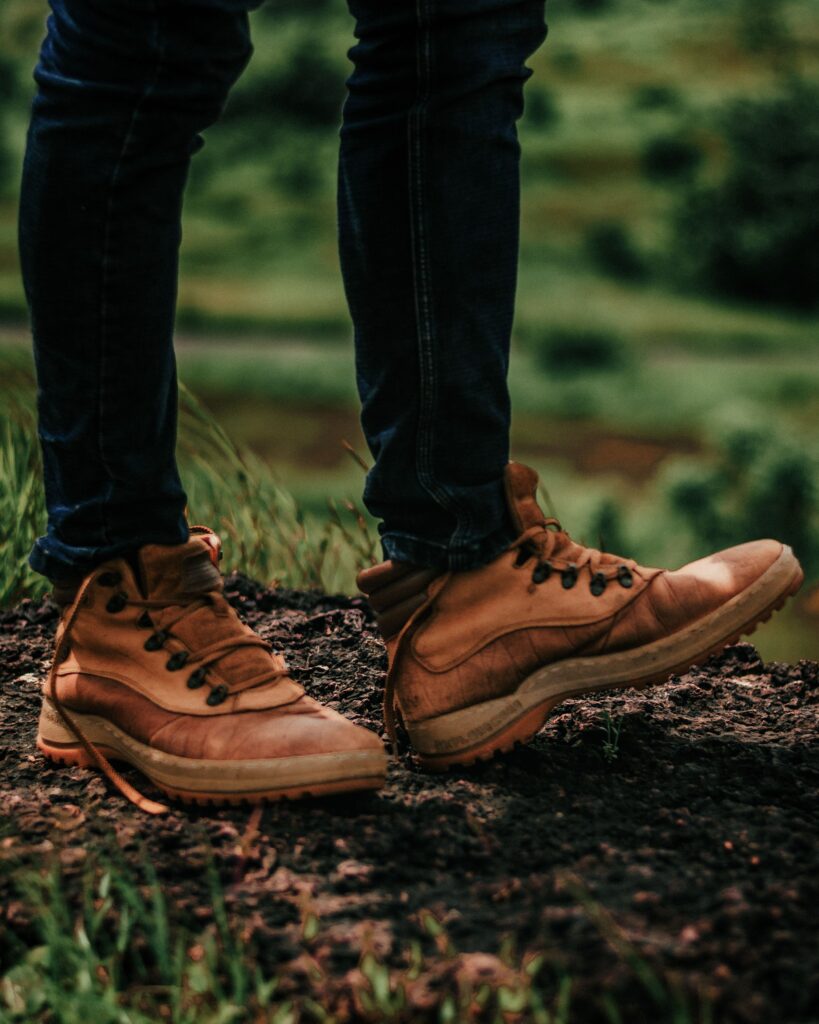
- Underestimating the heat and humidity — bring more water than you think you need.
- Wearing sandals or flip-flops on uneven stone steps and jungle roots.
- Assuming you can buy tickets at the gate without checking current rules — online and bank purchases are strongly encouraged, and availability isn’t guaranteed on arrival.
- Booking a sunrise tour without confirming it in advance — these tickets often can’t be purchased the same day.
- Forgetting cash — there are no ATMs inside the park.
- Trying to “do it all” in two rushed hours — Tikal rewards a slower pace far more than a checklist approach.
Extending Your Trip Beyond Tikal
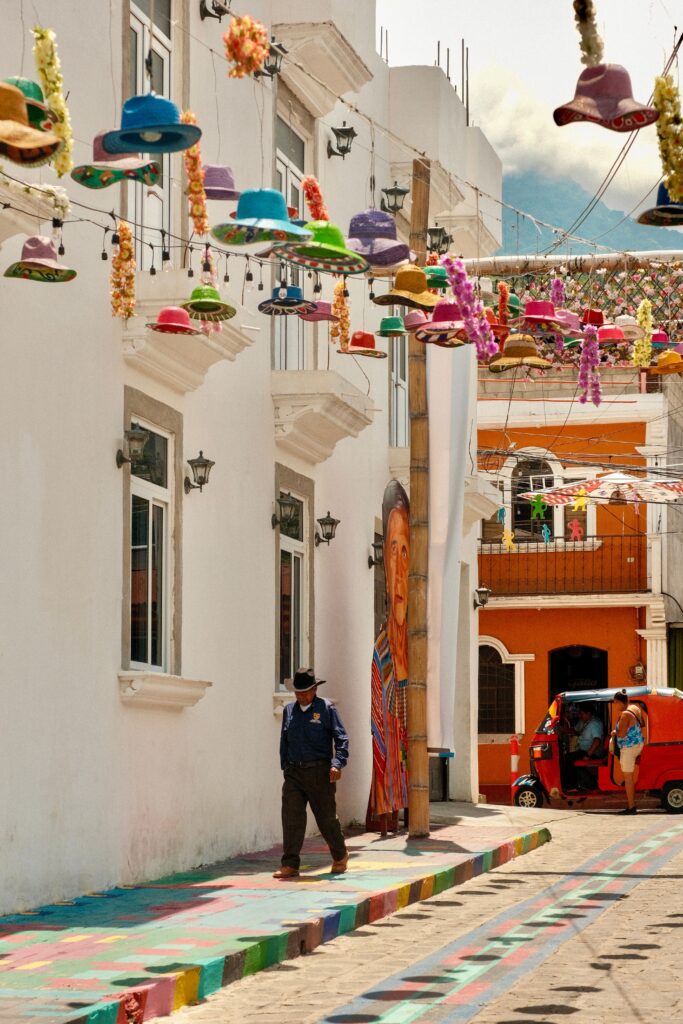
Tikal is unforgettable on its own, but it also pairs beautifully with the rest of a Central America itinerary. If you’re crossing overland from Belize, San Ignacio makes a great staging point. If you’re continuing south through Guatemala, the colorful markets of Chichicastenango and the volcano-ringed Lake Atitlán are natural next stops. And if your trip continues into neighboring El Salvador, our guide to exploring San Salvador is a great way to plan the next leg of a Central America adventure.
For travelers who like pairing ancient history with modern indulgence, it’s worth noting that some of the world’s most historic destinations aren’t ruins at all. If you enjoyed learning about a city that’s been around since 900 BC, you might get a kick out of our deep dive into Sobrino de Botín, widely recognized as the world’s oldest continuously operating restaurant.
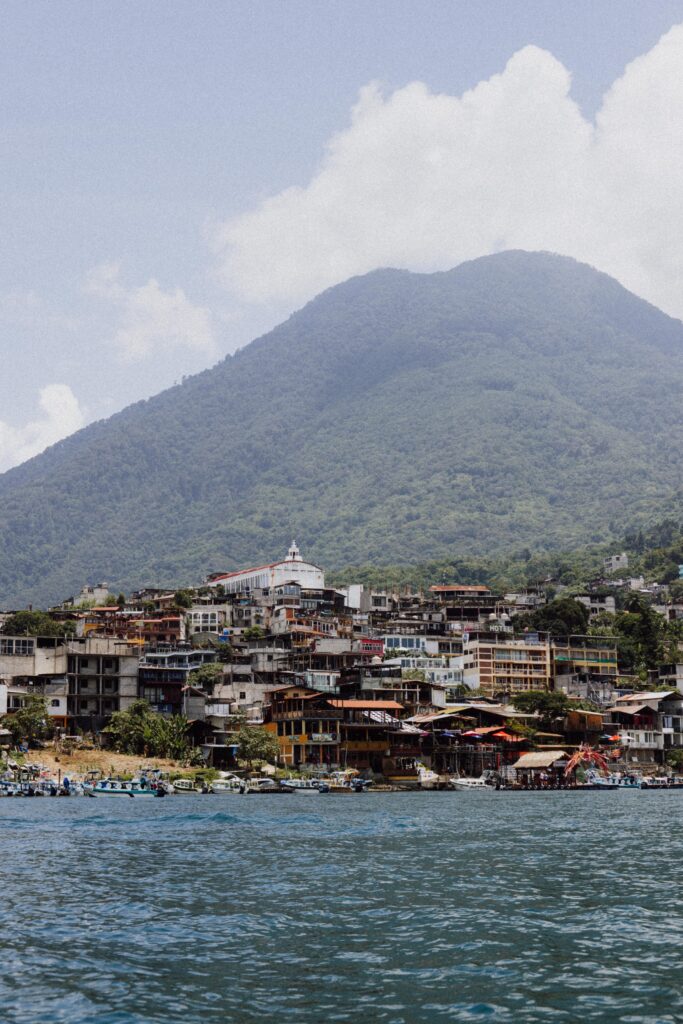
And if your Central America trip is really a stopover on a longer Latin America and Caribbean journey, don’t forget to build in some downtime after all that jungle trekking — our guides to the best beaches in Puerto Rico and Mexico’s most beautiful beach towns are perfect for the “relax and recover” half of your itinerary.
Frequently Asked Questions About Tikal National Park
What is Tikal National Park?
Tikal National Park is a protected rainforest reserve in northern Guatemala’s Petén region, built around the ruins of Tikal, one of the largest and most powerful cities of the ancient Maya civilization. It was declared a national park in 1955 and named a UNESCO World Heritage Site in 1979.
Where is Tikal National Park located?
Tikal National Park is located in the Petén Department of northern Guatemala, approximately 64 kilometers (40 miles) northeast of Flores and around 530 kilometers (329 miles) north of Guatemala City by road. While the drive from Guatemala City takes about 8–10 hours, most visitors choose to fly to Flores (Mundo Maya International Airport) and then travel about 1–1.5 hours by road to reach the park.
What country is Tikal National Park in?
Tikal National Park is entirely within Guatemala, close to its borders with Belize and Mexico.
Why is Tikal National Park famous?
Tikal is famous for being one of the largest and most influential cities of the ancient Maya world, home to some of the tallest pre-Columbian pyramids ever built, all set within a thriving tropical rainforest that’s still home to jaguars, howler monkeys, and hundreds of bird species.
How big is Tikal National Park?
The park covers approximately 575 square kilometers (222 square miles), though the main archaeological core, where most visitors spend their time, covers around 16 square kilometers.
How old is Tikal?
Human settlement in the area dates back to around 900 BC, with the city reaching its architectural peak during the Classic Maya Period, roughly 200 to 900 AD. Most of the temples visitors see today, including Temple I, were built in the 8th century AD.
What can you find at Tikal National Park?
Visitors will find thousands of ancient Maya structures including towering temples, palaces, ball courts, and plazas, along with an active rainforest ecosystem home to monkeys, toucans, coatis, and occasionally jaguars.
Can you walk through the ruins at Tikal National Park?
Yes. Most of the site is accessible via marked jungle trails and stone causeways, and you can walk freely between the major plazas, temples, and acropolis complexes. Climbing is permitted on select structures, including Temple II, Temple IV, and the Lost World Pyramid, though several others, including Temple I, are closed to climbing to protect the ancient stonework.
Do I need a guide to visit Tikal?
A guide isn’t required for a standard daytime visit, but one is legally required for sunrise or sunset access. Many visitors choose to hire one anyway, since Tikal is large enough that it’s easy to miss important structures or context without local expertise.
How much does it cost to visit Tikal National Park?
The standard entry fee for foreign visitors is Q150 (about US$20). Sunrise or sunset access requires an additional Q100 (about US$13) ticket, plus a guide fee; museum entry is a separate Q30 paid in cash on-site.
What is the best way to get to Tikal National Park?
Most travelers fly into Flores from Guatemala City and take a short shuttle, tour van, or taxi to the park, a journey of about 1 to 1.5 hours. Overland travel from Guatemala City, Antigua, or San Ignacio in Belize is also possible but takes considerably longer.
Why was Tikal abandoned?
There’s no single confirmed cause. Most archaeologists point to a combination of prolonged drought, deforestation, overpopulation, disrupted trade routes, and internal political instability that unfolded gradually across the 9th century AD, eventually leading residents to disperse.
What makes Tikal National Park unique among Maya ruins?
Tikal’s combination of scale, jungle setting, and living wildlife sets it apart. It’s home to the tallest known Maya pyramid (Temple IV), one of the largest concentrations of Maya architecture anywhere, and a fully active rainforest ecosystem, which is why it holds UNESCO recognition for both cultural and natural significance, a distinction very few World Heritage Sites share.
What is Mundo Perdido at Tikal?
Mundo Perdido, or the “Lost World,” is one of the oldest architectural complexes at Tikal, centered on a large pyramid believed to have had astronomical significance for the ancient Maya. It’s a popular spot for sunset tours thanks to its open, elevated views over the surrounding jungle.
Final Thoughts on Visiting Tikal National Park, Tikal
Tikal National Park, Tikal, is one of those rare places that genuinely lives up to the hype, and then some. Between the scale of the ruins, the depth of the history, and a rainforest that’s still very much alive around every Temple, it’s easy to see why so many travelers list it among the best things they’ve ever done in Central America. Book your tickets in advance, bring more water than you think you’ll need, and give yourself at least a full day (ideally two) to really take it in. Whether you catch the sunrise from the top of Temple IV or wander the Great Plaza at midday with howler monkeys roaring somewhere overhead, Tikal has a way of making you feel very small, in the best possible way.