
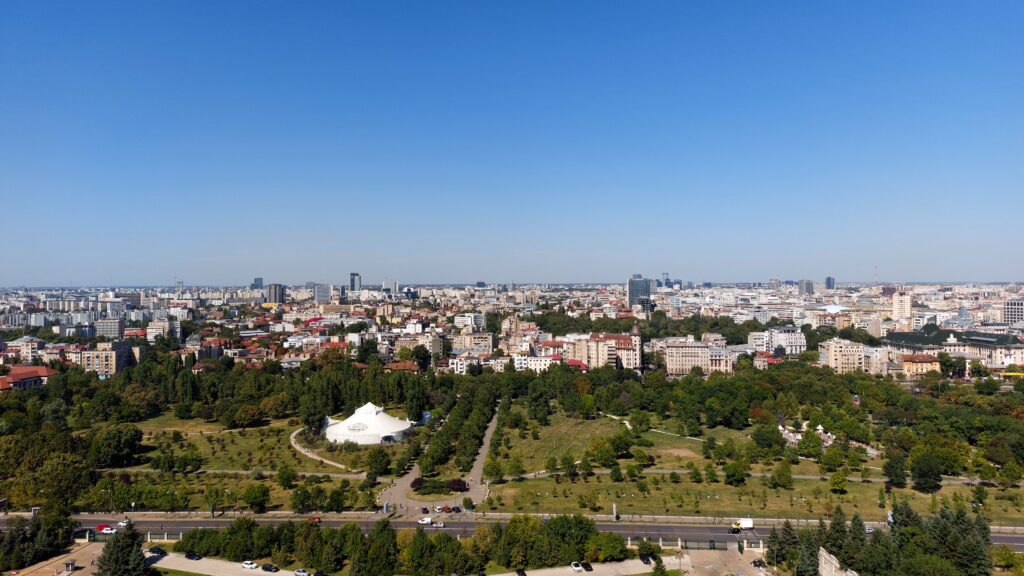
Bucharest catches travellers off guard — in the best possible way. Romania’s capital rarely gets the same attention as Paris, Rome, Prague, or Budapest, yet it delivers grand architecture, a dramatic modern history, energetic nightlife, leafy parks, excellent museums, creative cafés, hearty traditional food, and prices that make a weekend trip feel almost affordable by accident.
Look closely and the city’s split personality starts to show. One street is lined with elegant Belle Époque mansions; the next opens onto an enormous communist-era boulevard. Orthodox churches sit quietly between glass office blocks. Hidden passages lead to coffee shops, bookstores, wine bars, and courtyards that feel a world away from the traffic outside.
That contrast is what makes Bucharest memorable. It’s polished in places, rough around the edges in others, and almost always more interesting than first-time visitors expect.
Known historically as the “Little Paris of the East,” Bucharest developed a strong French architectural influence in the late nineteenth and early twentieth centuries, which left the city with handsome boulevards, ornate palaces, domed buildings, and graceful public squares. Earthquakes, war, communist redevelopment, and rapid modernisation reshaped it again after that. The result isn’t a perfectly preserved museum city — it’s a real, layered, lived-in place that’s still changing.
This guide covers the best attractions, hidden gems, neighbourhoods, food, nightlife, museums, parks, transport, where to stay, day trips, and the practical details you need to plan a visit.
Bucharest at a Glance
| Travel detail | Information |
|---|---|
| Country | Romania |
| Language | Romanian |
| Currency | Romanian leu (RON) |
| Main airport | Henri Coandă International Airport (Otopeni) |
| Ideal trip length | 2–4 days |
| Best for | Architecture, history, food, nightlife, museums, affordable city breaks |
| Best months | April–June and September–October |
| Historic centre | Lipscani (Bucharest Old Town) |
| Local transport | Metro, trams, buses, trolleybuses, taxis, ride-hailing apps |
Why Visit Bucharest?
Bucharest offers the variety of a major European capital without the price tag or the crowds of better-known destinations. It works especially well as a weekend city break: the main central attractions are close enough to link on foot, and the metro covers everything else. Explore the Old Town in the morning, tour the Palace of Parliament in the afternoon, eat traditional Romanian food in the evening, then finish at a rooftop bar or a live-music venue.
It’s also a natural launch point for a longer Romanian trip — from Bucharest you can continue to Sinaia, Peleș Castle, Brașov, Bran Castle, the wider Carpathians, or the Black Sea coast. If you’re stacking Bucharest into a longer Central European itinerary, our Munich travel guide is a useful companion read for comparing the two cities.
A Brief History of Bucharest
Bucharest was first documented in the fifteenth century and grew into the capital of Wallachia, then of the united Romanian principalities. Its most elegant transformation came in the late nineteenth and early twentieth centuries, when Romanian architects and planners looked to Paris for inspiration — wide avenues, decorative mansions, public gardens, theatres, banks, hotels, government buildings. That era is still visible along Calea Victoriei and around Revolution Square.
The twentieth century was rougher. Bucharest endured war, political instability, a devastating 1977 earthquake, and, under dictator Nicolae Ceaușescu, large-scale demolition of entire historic neighbourhoods to build monumental civic projects — most famously the Palace of Parliament and the boulevards surrounding it.
The Romanian Revolution of December 1989 ended communist rule, and Revolution Square remains the place to understand that chapter of the country’s history. Modern Bucharest carries evidence of every era side by side, rather than hiding any of them.
21 Best Things to Do in Bucharest
1. Explore Bucharest Old Town
Bucharest Old Town — Lipscani, or Centrul Vechi — is the natural starting point. This compact district holds cobblestone streets, churches, historic inns, restored façades, restaurants, cafés, bars, and bookstores.
By day it rewards slow exploration: wander past the main restaurant strips into the smaller lanes and you’ll find architectural details, quiet courtyards, and religious buildings tucked between much larger structures. Key stops include Stavropoleos Monastery, Lipscani Street, Cărturești Carusel, Manuc’s Inn, the National Bank of Romania, the National Museum of Romanian History, the Old Princely Court, and Macca-Vilacrosse Passage.
The mood shifts hard after sunset — terraces fill, music gets louder, and the district becomes the centre of Bucharest nightlife. If you’d rather sightsee here in the morning and eat somewhere quieter, head to Calea Victoriei, Dorobanți, Cotroceni, or Floreasca for dinner. Visit Bucharest’s Old Town overview has more background on the district’s architecture and streets if you want to go deeper before your trip.
Suggested image: Bucharest Old Town cobblestone streets and historic buildings
2. Tour the Palace of Parliament
The Palace of Parliament is Bucharest’s most imposing landmark — reportedly the heaviest building in the world, and second in floor area only to the Pentagon. Construction began in the 1980s as part of Ceaușescu’s civic redevelopment, which demolished or relocated entire historic neighbourhoods to make room for it.
Today it houses the Romanian Parliament and other institutions. Guided tours typically cover monumental staircases, marble halls, chandeliers, meeting rooms, and ceremonial balconies. Bring photo ID, arrive early, and book through the Chamber of Deputies’ official visitor portal before you go — access and available routes can change, since this is a working government building, and reservations typically need to be made at least 24 hours in advance.
Even without an interior tour, the surrounding area is worth a walk: Bulevardul Unirii offers good views of the building and the fountains running along it.
Suggested image: Palace of Parliament, Bucharest
3. Walk Calea Victoriei
Calea Victoriei is one of the most rewarding streets to walk in Bucharest, passing museums, hotels, churches, boutiques, historic houses, cafés, and some of the city’s most photographed buildings — Revolution Square, the Romanian Athenaeum, the National Museum of Art of Romania, the Central University Library, the former Royal Palace, Casa Capșa, the National Military Circle, and CEC Palace.
Don’t treat it as a route between attractions — stop for coffee, notice how the architectural style shifts block by block, and duck down the side streets. On some weekends and during warmer months, sections may close to traffic for pedestrian events; check local listings close to your travel dates.
4. Admire the Romanian Athenaeum
The Athenaeum is Bucharest’s architectural showpiece: a circular concert hall with a columned entrance, decorative dome, and landscaped forecourt, opened in 1888 and now home to the George Enescu Philharmonic Orchestra. The interior outdoes the exterior — a richly decorated concert hall, sweeping staircases, and a large historical fresco circling the dome.
Check the George Enescu Philharmonic’s official schedule if you’d like to catch a performance; interior access outside concert times varies.
Suggested image: Romanian Athenaeum, central Bucharest
5. Understand Modern History at Revolution Square
Revolution Square is essential for understanding Romania’s transition from dictatorship to democracy. It’s where Ceaușescu delivered his final public speech from the former Central Committee building in December 1989, moments before the crowd turned and his regime began to collapse within days.
Landmarks around the square include the former Royal Palace, the National Museum of Art of Romania, the Central University Library, the Memorial of Rebirth, the former Central Committee headquarters, and Kretzulescu Church. A guided walking tour adds useful context that isn’t obvious just from standing there.
6. Visit Stavropoleos Monastery
This small eighteenth-century church, tucked into the Old Town, is one of the most beautiful religious sites in the city — its modest size makes the detail hit harder. It’s built in the Brâncovenesc style: carved stonework, decorative columns, arches, and floral motifs in careful proportion.
Step inside respectfully, then linger in the courtyard, which feels noticeably calmer than the commercial streets surrounding it. Dress modestly and check whether photography is allowed before shooting inside.
7. Step Inside Cărturești Carusel
One of the most photographed bookstores in Europe, Cărturești Carusel occupies a restored nineteenth-century building with white balconies, curved staircases, tall columns, and a bright central atrium. It sells books, gifts, and design objects, but plenty of visitors come just to see the space.
Go soon after opening — by mid-afternoon the central staircase and upper balconies fill up fast, and photos get harder.
Suggested image: Cărturești Carusel interior, Bucharest
8. See the CEC Palace
Standing opposite the National Museum of Romanian History on Calea Victoriei, CEC Palace is instantly recognisable for its glass-and-metal dome and French-inspired façade. It still functions as a working bank, so interior access is limited, but it’s worth the two-minute detour on a walk between the Old Town and Calea Victoriei. The best photos come from across the street, where you can frame the whole dome and façade together.
9. Explore the National Museum of Art of Romania
Housed in the former Royal Palace beside Revolution Square, this museum’s collections span medieval Romanian art, modern Romanian art, and European works. If you’re short on time, prioritise the Romanian galleries — the religious art and sculpture there say a lot about what shaped the country’s identity. Budget at least two hours, and check the National Museum of Art of Romania’s official site for current hours and free-entry days before you go — entry is currently free on the first Wednesday of each month.
10. Discover Romanian History at the National Museum of History
The National Museum of Romanian History occupies the former Post Office Palace near the Old Town, with holdings spanning archaeology, royal history, decorative arts, manuscripts, and coins. Its best-known display is the Romanian Treasury, though gallery access can shift during renovations, so it’s worth checking the museum’s official site first.
11. Relax in Cișmigiu Gardens
Bucharest’s most central green space, created in the nineteenth century, has shaded paths, flowerbeds, a lake, and — depending on the season — rowing boats or winter activities. It’s an easy, useful stop between the Old Town, Calea Victoriei, and the Palace of Parliament: grab a coffee, walk the perimeter, and watch the city go about its day instead of rushing to the next landmark.
12. Spend Time in King Michael I Park
Still widely known as Herăstrău Park, this large lakeside park in northern Bucharest is the best place in the city for walking, cycling, or just getting away from traffic. A good half-day pairing: start at the Arch of Triumph, walk into the park, visit the Village Museum, circle part of the lake, and stop for lunch. This part of the city feels noticeably more open and relaxed than the historic centre.
13. Visit the Dimitrie Gusti National Village Museum
An open-air museum of traditional Romanian houses, churches, workshops, and gates — timber houses, thatched roofs, windmills, and farm buildings relocated here from across the country and reconstructed to show how rural communities actually lived. Set inside King Michael I Park, it’s a genuinely enjoyable way to spend an hour or two, and useful if a trip into Romania’s countryside isn’t in your itinerary. Check current hours on the official Village Museum site before you go, since seasonal opening times shift.
Suggested image: traditional Romanian house at the Village Museum
14. Photograph the Arch of Triumph
Near King Michael I Park, Bucharest’s Arch of Triumph honours Romania’s role in the First World War and visually echoes Paris’s Arc de Triomphe. Traffic circles it constantly, so use the marked crossings; interior and rooftop access is limited to certain dates or special events. Easiest to combine with the park and Village Museum rather than visiting on its own.
15. Walk Through Macca-Vilacrosse Passage
A covered, fork-shaped arcade just off Calea Victoriei with a warm glass roof and decorative façades — it takes only a few minutes to see but fits naturally into a walking route connecting CEC Palace, the History Museum, Calea Victoriei, and Lipscani. Cafés along the passage get lively later in the day.
16. Visit Manuc’s Inn
One of Bucharest’s oldest surviving inns, built in the early nineteenth century around a large courtyard with wooden balconies in a caravanserai layout. Restaurants now occupy parts of the complex, but even a quick look into the courtyard is worth the short walk from Piața Unirii.
17. See the Bucharest Fountains
The fountains along Piața Unirii and Bulevardul Unirii are among the city’s most visible modern public spaces. In warmer months, evening shows sometimes combine water, light, and music — programmes vary by season, so check current dates locally. They pair well with dinner in the Old Town or an afternoon at the Palace of Parliament.
18. Experience Therme Bucharest
A large wellness complex near the airport, north of the city, with thermal pools, palm-filled indoor spaces, saunas, and water attractions split across family, adult, and premium zones. It’s not a historic Bucharest sight, but it’s a strong option for winter or a rainy day — plan on spending several hours rather than treating it as a quick stop, and check ticket structures and age policies on the official Therme site before booking, since areas and access differ.
19. Explore Bucharest’s Café Culture
Bucharest has built a genuinely strong speciality-coffee scene: minimalist espresso bars, restored townhouse cafés, garden terraces, and bakeries scattered through Calea Victoriei, Universitate, Piața Romană, Dorobanți, Floreasca, Cotroceni, and the quieter edges of the Old Town. Rather than chasing a “best of” list that goes stale fast, check recent local reviews and pick somewhere close to wherever you’re already walking. It’s the kind of neighbourhood-café culture we’ve written about before in our piece on Cafe Jacqueline in San Francisco’s North Beach — a good reminder that a city’s best food moments often happen in places no guidebook flags.
20. Experience Bucharest Nightlife
Bucharest has one of Eastern Europe’s liveliest nightlife scenes. The Old Town has the highest concentration of pubs, bars, and clubs — convenient, but also the loudest and most tourist-focused. For cocktails, wine bars, and a quieter evening, try Calea Victoriei, Dorobanți, or Floreasca; for live jazz, electronic, or rock, look across the central neighbourhoods more broadly.
Usual precautions apply here as in any big city: keep an eye on your drink, use a licensed taxi or a trusted ride-hailing app, confirm prices before ordering bottle service, and avoid poorly lit streets alone late at night.
21. Try Traditional Romanian Food
Romanian food is hearty and shaped by Balkan, Ottoman, and Central European influence in roughly equal measure. Look for:
- Sarmale — cabbage or vine leaves filled with seasoned meat and rice, usually served with sour cream and mămăligă
- Mici — grilled rolls of seasoned minced meat, served with mustard and bread
- Mămăligă — a cornmeal dish similar to polenta, served plain or with cheese, sour cream, or stew
- Ciorbă — sour soup, in beef, meatball, bean, or tripe variations
- Tochitură — a rich meat stew usually served with mămăligă, cheese, and a fried egg
- Zacuscă — a spread made from roasted aubergine, peppers, and onion
- Papanași — fried or boiled cheese doughnuts with sour cream and fruit preserve
- Cozonac — a sweet holiday bread often shared at family gatherings
For a more local meal, move a block or two off the busiest Old Town restaurant strips — the food is often better and noticeably cheaper.
Hidden Gems in Bucharest
Bellu Cemetery — the resting place of many of Romania’s writers, artists, and politicians, with striking monuments and tree-lined paths. It’s an active cemetery, so visit respectfully; a specialist guided tour adds context you won’t get walking through alone.
Cotroceni — one of Bucharest’s most attractive residential neighbourhoods, with tree-lined streets, villas, and small cafés. Better suited to travellers who’d rather wander than sightsee.
Carol I Park — formal landscaping, broad stairways, a lake, and the striking Mausoleum. Less internationally known than Herăstrău, but arguably more dramatic.
The Armenian Quarter — religious buildings and historic houses tied to Bucharest’s Armenian community, and a good area for anyone interested in the city’s multicultural history.
Pasajul Englez and Pasajul Victoriei — a couple of small, photogenic passages worth a five-minute detour on a wider walk, rather than a destination on their own.
Best Bucharest Museums
Beyond the National Museum of Art, National History Museum, and Village Museum, culture-focused travellers should consider the National Museum of the Romanian Peasant, the Grigore Antipa National Museum of Natural History, the Museum of Bucharest at Suțu Palace, the Museum of Recent Art, the National Museum of Contemporary Art, the George Enescu National Museum, the National Military Museum, and the Museum of Maps and Old Books. Several offer free admission on specific dates — always confirm current policy before you go, since it changes.
Best Bucharest Neighbourhoods
- Lipscani — first-time sightseeing, nightlife, and easy restaurant access
- Universitate — a practical, well-connected central base
- Calea Victoriei — architecture, elegant hotels, and museums
- Piața Romană — convenient transport and central cafés
- Dorobanți — stylish restaurants, embassies, upmarket residential streets
- Floreasca — modern dining and nightlife
- Cotroceni — peaceful walks and historic villas
A Perfect 3-Day Bucharest Itinerary
Day 1 — Old Town and Central Bucharest Morning: Start at Universitate and walk into the Old Town — Cărturești Carusel, Stavropoleos Monastery, Lipscani Street, Manuc’s Inn. Lunch: a Romanian restaurant for ciorbă, mici, or sarmale. Afternoon: the National Museum of Romanian History, CEC Palace, Macca-Vilacrosse Passage, and Calea Victoriei. Evening: dinner in or near the Old Town, then a rooftop drink, a wine bar, or the district’s nightlife.
Day 2 — Palace of Parliament and Elegant Bucharest Morning: a guided Palace of Parliament tour (book ahead, and allow extra time for security). Afternoon: Cișmigiu Gardens, then Revolution Square, the National Museum of Art, the Romanian Athenaeum, and Calea Victoriei. Evening: dinner near Piața Romană, Calea Victoriei, or Dorobanți.
Day 3 — Parks, Heritage, and Local Bucharest Morning: the Arch of Triumph into King Michael I Park. Late morning/afternoon: the Village Museum and a walk around the lake. Alternative afternoon: Therme Bucharest, the National Museum of the Romanian Peasant, a Cotroceni walk, or Carol I Park. Evening: a final Romanian dinner back in the centre.
One day only? Start at the Athenaeum, walk through Revolution Square and down Calea Victoriei to CEC Palace, then into the Old Town for Stavropoleos Monastery and Cărturești Carusel. After lunch, choose either the Palace of Parliament or the National Museum of Art, then finish with dinner in the centre.
Five days? Follow the three-day plan above, add a half-day at Therme Bucharest, and use the fifth day for a day trip to Sinaia and Peleș Castle, or to Brașov and Bran Castle. For more on pacing a longer city stay against day trips, see our San Salvador travel guide and things to do in Montreal.
Best Day Trips from Bucharest
Peleș Castle and Sinaia — one of Romania’s most beautiful royal residences, set against the Carpathians, with elaborately decorated interiors. Sinaia itself is worth a wander for its mountain setting and monastery. Since December 2025, tickets are sold only for timed entry slots — book ahead through the official Peleș Castle ticket site rather than a reseller.
Brașov — a compact medieval centre, colourful buildings, mountain views, and the Black Church around Council Square. Doable as a day trip, but an overnight stay makes for a much more relaxed visit.
Bran Castle — strongly marketed on its Dracula connection, though the link to the historical Vlad the Impaler is thin at best. It’s popular anyway, for its dramatic hilltop setting alone. Book through the official Bran Castle site to avoid the lookalike ticket resellers that rank highly in search results.
Snagov — a quieter escape north of the city, known for its lake, monastery, and its own Vlad the Impaler legends.
Constanța and the Black Sea — reachable by train, with seaside architecture, archaeology, and coastal access. Most appealing in warmer months, when resort towns get busy.
Transfăgărășan Road — one of Romania’s most dramatic mountain drives, but seasonal and weather-dependent, and not a casual day trip from the city — check road status and driving time before committing to it.
For more on building longer itineraries around a single landmark, our guides to Tikal National Park in Guatemala and San Cristóbal in the Galápagos cover the same balance of a major sight plus slower, local exploring.
Best Time to Visit Bucharest
Spring (March–May) is one of the best seasons here — comfortable temperatures, parks in bloom, terraces reopening. April and May are the sweet spot, with occasional rain.
Summer (June–August) brings long days, festivals, and busy outdoor nightlife, but July and August can run hot — plan major outdoor sightseeing for the morning and save the afternoon for a museum or café break.
Autumn (September–November) is arguably the best window for walking: early autumn brings good weather and lighter crowds, while later autumn turns cool and rainy, so pack layers.
Winter (December–February) suits museums, cafés, Christmas markets, and Therme Bucharest. Temperatures can drop below freezing and snow is possible, so bring a proper coat and waterproof shoes.
How to Get to Bucharest
By air: Most international visitors land at Henri Coandă International Airport (Otopeni), north of the centre. Trains, buses, licensed taxis, private transfers, and ride-hailing apps all run from there — check the official Bucharest Airports site for current terminal and transport details.
By train: Bucharest North Railway Station (Gara de Nord) connects the capital with Romanian cities and some international routes.
By bus: Long-distance coaches link Bucharest with destinations across Romania and neighbouring countries — confirm your departure station in advance, since the city has several.
Getting Around Bucharest
The metro is the fastest option for longer journeys, with central stations at Universitate, Piața Unirii, Piața Romană, and Victoriei. Buses, trams, and trolleybuses cover the gaps the metro doesn’t, though traffic can slow them down. Walking is the best way to see the Old Town, Calea Victoriei, and Revolution Square — just bring comfortable shoes, since pavement quality varies. For taxis and ride-hailing, stick to official ranks, reputable companies, or recognised apps, and avoid unsolicited offers from drivers inside transport terminals.
Where to Stay in Bucharest
- Universitate — best for first-time visitors: central, well connected, walkable to the Old Town and Calea Victoriei
- Old Town — best for nightlife, with restaurants and bars outside your door (and the noise that comes with it — read recent reviews before booking)
- Calea Victoriei — best for architecture and style, near museums and the Athenaeum
- Cotroceni — best for a local, residential feel
- Floreasca — best for modern dining and a younger, upmarket scene
Bucharest Food Guide
Breakfast: a bakery selling covrigi (a Romanian pretzel-style bread) and strong coffee beats a hotel buffet for a proper local start.
Lunch: ciorbă, grilled meat, or a fixed lunch menu — restaurants a street or two off the main tourist drag tend to offer better value.
Dinner: sarmale, tochitură, grilled meat, or freshwater fish, finished with papanași if there’s room.
Drinks: Romanian wine is underrated internationally — ask for local grape varieties. Țuică and pălincă are strong fruit spirits worth trying slowly.
Bucharest Travel Costs
Bucharest is generally cheaper than most Western European capitals, though spending varies a lot by choice.
Budget: hostel or guesthouse stays, public transport, lunch-menu deals, free parks and churches, and free museum days.
Mid-range: a central three- or four-star hotel, restaurant meals, museum tickets, occasional ride-hailing, a Palace of Parliament tour, and one paid day trip.
Luxury: historic hotels, international five-star brands, private guides, spa time, fine dining, and chauffeured transfers are all readily available.
Prices and exchange rates shift, so check current costs shortly before travelling.
Is Bucharest Safe?
Bucharest is manageable with normal big-city awareness. The most common issues are petty theft, misleading taxi offers, nightlife overcharging, and traffic rather than anything more serious. Keep valuables secure in crowds, use trusted transport, avoid poorly lit streets late at night, take extra care crossing roads, keep a copy of your passport separate from the original, and carry appropriate travel insurance. The emergency number in Romania is 112.
Practical Bucharest Travel Tips
- Currency: Romania uses the leu (RON), not the euro. Cards are widely accepted, but keep some cash for small purchases.
- Skip dynamic currency conversion: if a card terminal or ATM offers to charge you in your home currency, choose RON instead — the exchange rate offered is usually worse.
- Book ahead: Palace of Parliament tours and popular day trips can sell out on weekends and in peak season.
- Check for Monday closures: several museums close or run reduced hours on Mondays.
- Wear comfortable shoes: the centre is walkable, but the paving is uneven in places.
- Download offline maps before you land, in case Wi-Fi is patchy.
- A few useful phrases: Bună ziua (good day), Mulțumesc (thank you), Vă rog (please), Da/Nu (yes/no), Cât costă? (how much does it cost?), Unde este…? (where is…?)
Frequently Asked Questions About Bucharest
Is Bucharest worth visiting? Yes — grand architecture, communist-era history, strong museums, good food, parks, and nightlife at prices well below most Western European capitals make it a solid two- to three-day city break.
How many days do you need in Bucharest? Two days cover the Old Town, Palace of Parliament, and Calea Victoriei. Three lets you add museums, parks, or Therme. A fourth opens up a day trip to Peleș Castle or Brașov.
What is Bucharest famous for? The Palace of Parliament, the Romanian Athenaeum, the Old Town, Calea Victoriei, Revolution Square, its nightlife, and its communist-era history — plus its old nickname, the “Little Paris of the East.”
Is Bucharest expensive? No — it’s generally cheaper than London, Paris, or Amsterdam, though central hotels and fashionable restaurants can still add up.
Is Bucharest safe at night? Central Bucharest, especially around the Old Town, stays busy well into the evening. Standard precautions apply: avoid isolated streets, watch your valuables, and use reputable transport after drinking.
What’s the best month to visit? May, June, September, and early October for comfortable sightseeing weather; December if you want Christmas markets and a winter atmosphere.
Does Bucharest have good nightlife? Yes — pubs, cocktail bars, clubs, rooftop venues, and live music, concentrated in the Old Town but with quieter, more refined options in Floreasca and Dorobanți.
What food should I try? Sarmale, mici, mămăligă, ciorbă, tochitură, zacuscă, papanași, and a glass of Romanian wine.
Is Bucharest good for couples? Yes — architectural walks, cafés, wine bars, Athenaeum concerts, a spa day at Therme, and castle day trips all suit a couples’ trip well.
Is Bucharest family-friendly? Yes — King Michael I Park, the Village Museum, the Grigore Antipa Museum, Therme’s family zones, and the central parks all work well, though it’s worth checking age rules before booking Therme or specific tours.
Do people speak English? Widely, especially in hotels, restaurants, and among younger residents — though a few Romanian greetings are always appreciated.
What currency should I bring? The Romanian leu (RON). Romania is an EU member but hasn’t adopted the euro.
Is the Palace of Parliament worth touring? Yes, especially if you’re interested in architecture or twentieth-century politics — the scale is hard to grasp from photos alone. Book ahead and bring ID.
Where’s the best area to stay? Universitate, Calea Victoriei, or Piața Romană for first-time visitors; Old Town for nightlife; Cotroceni for a quieter, more local stay.
Final Thoughts: Why Bucharest Deserves More Attention
Bucharest isn’t beautiful in a simple, predictable way — its appeal comes from contrast. Belle Époque mansions sit beside communist apartment blocks, centuries-old churches stand behind modern office towers, and busy boulevards run a few minutes from peaceful gardens and quiet courtyards.
Come for the Palace of Parliament, the Athenaeum, and the Old Town, but leave room for the slower moments too: a morning coffee near Calea Victoriei, a walk through Cotroceni, an afternoon at the Village Museum, a bowl of ciorbă in a neighbourhood restaurant no guidebook mentions. A rushed checklist will show you Bucharest’s landmarks. A slower visit will show you the city itself — complicated, affordable, and full of surprises in a way that few European capitals still manage.
If Bucharest has you thinking about where to go next, browse our best Mexico beaches guide, Great Barrier Reef snorkelling guide, and Puerto Rico experiences guide for more destination inspiration.